


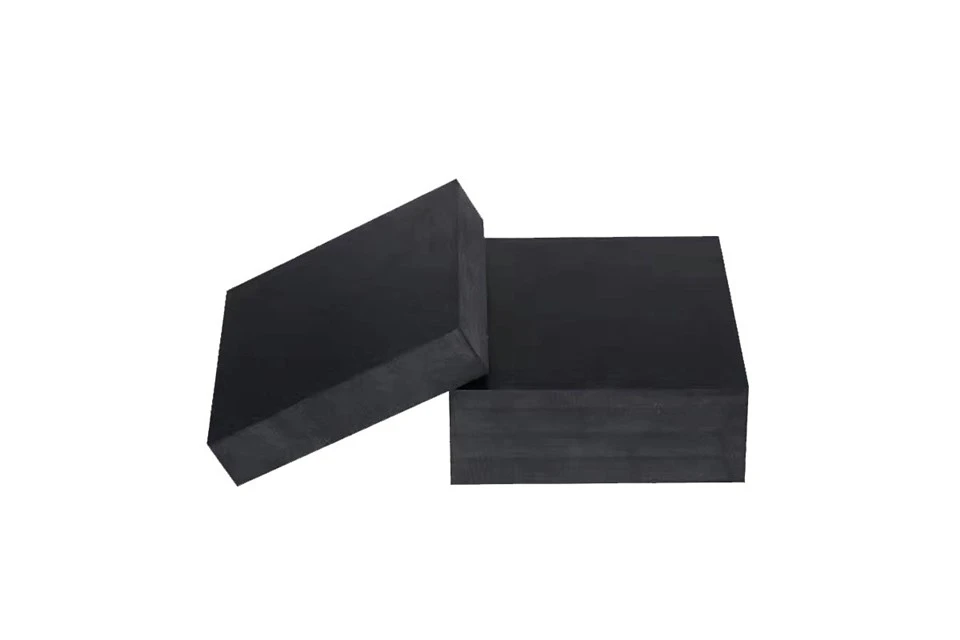
Product Specification of Rubber Bearings for space frame

I. Product Overview
1.1 Product Definition
Grid rubber bearings are node support components developed based on the properties of polymer elastic materials and the mechanical requirements of steel structures. They are formed by compounding multi-layer rubber sheets and stiffened steel plates through pressure vulcanization. Specifically designed to resolve core contradictions in load transmission, deformation adaptation, and vibration buffering of grid structures, they are key load-bearing components for the safe operation of large-span grid buildings.
Grid rubber bearings possess considerable vertical stiffness and vertical load-bearing capacity, enabling them to support loads imposed by upper components. Under load, they achieve shock absorption through energy dissipation caused by local deformation of the backing plate. Bearings are fixed to upper and lower components via bolts through pre-reserved fixed bolt holes. Grid rubber backing plates have a certain vertical rotation function, with no horizontal displacement, mainly serving the purpose of vertical shock absorption. Due to bolt limitation, horizontal shear of the backing plate is not considered. Grid rubber backing plates are suitable for grid structures with a vertical load-bearing capacity not exceeding 4000kN. They feature simple structure, easy installation, replacement and maintenance, and low cost.
1.2 Product Classification
★ According to functional characteristics and structural requirements, the products are mainly divided into three categories:
Normal rubber bearings: Suitable for nodes without anti-pulling requirements, with vertical load-bearing, vertical rotation, and basic horizontal shear resistance functions, directly undertaking regular loads and deformations of grid structures.
Axial shock-absorbing rubber bearings: Optimized for dynamic loads, with enhanced energy-dissipating and shock-absorbing effects through the damping characteristics of rubber, suitable for node scenarios with vertical loads not exceeding 4000kN.
Tension-compression rubber bearings: With special structural design, they can bear both vertical tension and compression loads, suitable for grid nodes with negative reaction forces. Their horizontal load-bearing capacity and vertical pulling force are significantly higher than those of ordinary bearings.
★ Supplementary classification by displacement characteristics:
Fixed type (GD): Restricts horizontal displacement, only meeting the requirement of vertical rotation, suitable for fixed support nodes of grids.
Unidirectional type (DX): Allows horizontal displacement in a single direction, suitable for structures mainly subject to unidirectional temperature expansion and contraction.
Bidirectional type (SX): Supports horizontal displacement in two directions, meeting the multi-directional deformation requirements of large-span grids.
II. Structural Composition and Working Principle

2.1 Core Structure
The product adopts a "rubber-steel plate" composite sandwich structure, with key components and their functions as follows:
Elastic load-bearing layer: Made of natural rubber (NR), chloroprene rubber (CR), or ethylene-propylene-diene monomer rubber (EPDM), providing vertical elastic support and horizontal deformation capacity, and achieving shock absorption and energy dissipation through material damping.
Stiffening layer: Embedded with Q235 or Q345 cold-rolled thin steel plates, treated with rust removal and galvanization. It effectively restricts the lateral expansion of rubber, improves the vertical stiffness and load-bearing limit of the bearing, and ensures uniform load transmission.
Functional auxiliary layer: PTFE sliding plate-type bearings are equipped with polytetrafluoroethylene (PTFE) sliding plates and stainless steel mirror surfaces to reduce the horizontal friction coefficient (≤0.03) and meet the requirement of large displacement; conventional bearings are reserved with four sets of fixed bolt holes to realize reliable connection with upper and lower structures.
2.2 Working Principle

Load transmission: Through the vertical stiffness of the multi-layer composite structure, vertical forces such as grid self-weight, roof live load, and snow load are evenly transmitted to the lower supporting structure. The synergy between steel plates and rubber avoids local stress concentration.
Deformation adaptation: The shear deformation characteristics of rubber are used to absorb horizontal displacement caused by temperature changes and concrete shrinkage. Vertical rotation of the bearing (≥0.01rad) is achieved through uneven compression of the rubber layer, resolving additional structural stress.
Shock absorption and energy dissipation: Under dynamic loads such as earthquakes and wind vibrations, rubber materials absorb energy through hysteretic deformation, and local deformation of the backing plate further dissipates vibration energy, reducing the vibration response of the upper structure.
Rotation is realized by the relative rotation of the spherical core with the upper seat plate and the base; displacement is realized by the sliding of the base in the box; resistance to vertical tension is realized by the upper seat plate, the base, and the box; horizontal force is realized by the box, the base, and the upper seat plate. Grid bearings are made of carbon steel or high-quality steel (material: ZG270-480H/Q345B) through mold making, sand casting, casting, heat treatment, mechanical processing, and surface treatment. Grid bearings adapt to the displacement and rotation of grid steel structures through rolling, swinging, and sliding of steel components, and have the function of overcoming seismic horizontal force and seismic uplifting force. They are suitable for grid projects, steel structure bridges, large-span bridges and roof space structures, corridor projects, stadiums, airports and high-speed rail stations, railway stations, swimming pools, exhibition centers, high-rise buildings, science and technology museums, cultural exhibition halls, toll stations, and other large-scale grid steel structure projects.
III. Production Process and Quality Control
3.1 Production Process Flow
- Raw material inspection: Rubber raw materials shall comply with GB/T 5574 standard, with tests on Shore hardness (55-75HA), tensile strength (≥15MPa), and other indicators; steel plates shall undergo material testing and rust removal grade testing (Sa2.5 grade) to ensure compliance with Q235/Q345 material requirements.
- Rubber mixing: Raw rubber, carbon black, vulcanizing agent, and other auxiliary materials are put into an internal mixer according to the formula, and mixed at 120-150℃ for 15-20 minutes to ensure uniform dispersion of components. The mixed rubber is parked for 4-8 hours for maturation.
- Steel plate pretreatment: Rust-removed steel plates are galvanized or coated to increase adhesion with rubber; they are cut according to the designed size, and edges are chamfered to remove burrs.
- Lamination and molding: Rubber sheets and steel plates are alternately stacked, with the thickness of the rubber layer controlled at 3-8mm and the thickness of the steel plate at 2-4mm. A positioning tool is used to ensure center alignment to form a blank.
- Pressure vulcanization: The blank is put into a vulcanization mold and vulcanized at 150-160℃ and 15-20MPa for 20-40 minutes. Specific parameters are adjusted according to the bearing size and rubber type to ensure complete vulcanization.
- Trimming and inspection: After vulcanization, flash and burrs are removed, and appearance inspection (no bubbles, cracks), dimension measurement, and hardness testing are conducted; random sampling is performed for mechanical performance tests such as load-bearing capacity and displacement.
3.2 Quality Control System
- The ISO9001 quality management system is followed throughout the process, with quality control points set for key processes.
- A "double inspection system" is implemented for incoming raw materials: verification of manufacturer's certificates and third-party inspection reports.
- Finished products are sampled by batch, and tests on vertical load-bearing capacity (no damage under 1.5 times overload) and horizontal shear deformation (≥300% shear strain) are conducted in accordance with GB 20688.4 standard.
IV. Product Performance Characteristics
- High-strength load-bearing: The vertical load-bearing capacity ranges from 50 to 4000kN. By reasonably matching rubber hardness and the number of steel plate layers, the vertical deformation under the designed load is ensured to be ≤1.5mm, meeting the load-bearing requirements of large-span grids.
- Multi-dimensional deformation adaptation: The horizontal displacement can reach ±50-±150mm (bidirectional/unidirectional optional), with an allowable rotation angle of ≥0.01rad, fully adapting to the deformation of the grid caused by temperature changes (-45-60℃) and foundation settlement.
- Excellent shock absorption performance: The damping ratio of rubber materials is ≥0.05, which can reduce the structural vibration response by 30%-50% under earthquake action, improving the seismic safety of the grid.
- Weather resistance and corrosion resistance: Appropriate rubber materials are selected according to the environment. Chloroprene rubber (-25-60℃) is suitable for normal temperature areas, natural rubber (-40-60℃) is suitable for cold areas, and the anti-aging life of EPDM rubber is ≥50 years.
- Convenient installation and maintenance: With a low structural height (50-150mm), it is directly fixed by bolts, and the allowable range of installation deviation is ≤2‰; daily maintenance only requires regular cleaning of debris and inspection of rubber aging, with low maintenance costs.
V. Product Specification Parameters
5.1 Specification Table of Ordinary Plate-type Grid Rubber Bearings
|
Model Specification |
Vertical Load-bearing Capacity (kN) |
Plane Dimension (mm×mm) |
Bearing Height (mm) |
Applicable Rubber Material |
Allowable Rotation Angle (rad) |
Number of Bolt Holes |
|
GJZ-300 |
300 |
210×230 |
50 |
CR/NR |
≥0.01 |
4 |
|
GJZ-500 |
500 |
230×260 |
70 |
CR/NR |
≥0.01 |
4 |
|
GJZ-800 |
800 |
290×290 |
75 |
CR/NR |
≥0.01 |
4 |
|
GJZ-1500 |
1500 |
420×420 |
90 |
CR/NR/EPDM |
≥0.015 |
4 |
|
GJZ-2500 |
2500 |
550×550 |
130 |
CR/NR/EPDM |
≥0.015 |
4 |
|
GJZ-4000 |
4000 |
700×700 |
150 |
CR/NR/EPDM |
≥0.02 |
8 |
5.2 Specification Table of Circular Grid Rubber Bearings
|
Model Specification |
Vertical Load-bearing Capacity (kN) |
Diameter (mm) |
Bearing Height (mm) |
Applicable Rubber Material |
Allowable Rotation Angle (rad) |
Number of Bolt Holes |
|
GYZ-300 |
300 |
250 |
50 |
CR/NR |
≥0.01 |
4 |
|
GYZ-600 |
600 |
350 |
70 |
CR/NR |
≥0.01 |
4 |
|
GYZ-1200 |
1200 |
450 |
90 |
CR/NR/EPDM |
≥0.015 |
4 |
|
GYZ-2000 |
2000 |
550 |
110 |
CR/NR/EPDM |
≥0.015 |
8 |
|
GYZ-3500 |
3500 |
650 |
140 |
CR/NR/EPDM |
≥0.02 |
8 |
5.3 Specification Table of PTFE Sliding Grid Rubber Bearings
|
Model Specification |
Vertical Load-bearing Capacity (kN) |
Plane Dimension (mm×mm) |
Bearing Height (mm) |
Horizontal Displacement (mm) |
Friction Coefficient |
Applicable Rubber Material |
|
GJZF4-500 |
500 |
260×260 |
75 |
±50 |
≤0.03 |
CR/NR |
|
GJZF4-1000 |
1000 |
310×420 |
85 |
±100 |
≤0.03 |
CR/NR |
|
GJZF4-2000 |
2000 |
420×550 |
105 |
±150 |
≤0.03 |
CR/NR/EPDM |
|
GYZF4-1500 |
1500 |
φ450 |
95 |
±100 |
≤0.03 |
CR/NR/EPDM |
|
GYZF4-3000 |
3000 |
φ600 |
130 |
±150 |
≤0.03 |
CR/NR/EPDM |
VI. Application Scenarios and Typical Cases
6.1 Application Scenarios
- Stadiums: Column top supports for grid roof systems, adapting to large-span spatial deformation and vibrations from crowd activities.
- Transportation hubs: Grid structure nodes in airport terminals and railway station waiting halls, resisting temperature changes and wind loads.
- Public buildings: Large-space buildings such as exhibition centers, theaters, and cultural and art centers, meeting the requirements of shock absorption and load-bearing.
- Industrial and storage facilities: Grid bearings in large workshops and logistics storage centers, adapting to heavy roof loads and settlement deformation.
6.2 Issues to Note in the Selection of Grid Bearings
(1) Flat pressure bearings can be used for small-span grids. The angular displacement of this type of bearing is constrained, and elliptical bolt holes can be opened on the bearing base plate during design. When the grid overcomes the friction force of the bearing, horizontal displacement can occur. When it is necessary to enhance the sliding capacity, a rubber bearing or a PTFE plate can be added between the bearing and the transition steel plate.
(2) Single-sided arc pressure bearings can be used for small and medium-span grids. The bearing can rotate along the arc surface, which improves the impact of grid deflection and temperature stress on the bearing's mechanical performance.
(3) Double-sided arc pressure bearings are suitable for large-span grids, and spherical hinge pressure bearings are suitable for multi-support large-span grids. Due to their complex structure and high price, they are used in some extra-large-span civil buildings.
(4) Grid rubber bearings are suitable for medium and large-span grids, arc grids, and latticed shell structures. This type of bearing can not only enable the grid bearing to obtain sufficient load-bearing capacity without excessive compression deformation but also, due to the good elasticity and large shear deformation capacity of the rubber backing plate, can adapt to the rotation requirements of the bearing node, as well as the horizontal displacement caused by temperature changes and earthquake action, and can improve the stress state of the lower supporting structure. Grid rubber bearings have been successfully applied in many medium and large-span grid structure projects in China and have achieved good technical and economic effects.
VII. Executive Standards (Chinese Standards)
Product standard: GB 20688.4-2007 "Rubber Bearings - Part 4: Ordinary Rubber Bearings"
Design code: GB 50011-2010 "Code for Seismic Design of Buildings" (2016 Edition)
Steel structure code: GB 50017-2017 "Standard for Design of Steel Structures"
Bearing code: JG/T 409-2017 "Steel Structure Grid Bearings"
Material standard: GB/T 5574-2019 "Rubber Sheets for Industrial Use"
Testing standard: GB/T 17955-2015 "Spherical Bearings for Bridges"
VIII. Installation and Maintenance
8.1 Installation Process
- Preliminary preparation: Check the consistency between the bearing model and the design drawings, ensure that there is no aging of rubber and no rust on steel plates; clean the supporting surface to ensure it is flat and clean.
- Cushion construction: Pour 20-50mm thick dry 硬性 non-shrinking high-grade mortar between the bottom surface of the bearing and the bearing stone to ensure uniform pressure bearing.
- Positioning and adjustment: The deviation between the bearing center and the designed position shall be ≤2‰, and the parallelism deviation between the installation plane and the sliding plane shall be ≤2‰; adjust the levelness with steel wedges to ensure uniform force.
- Fixing and locking: Fix with the upper and lower structures through bolt holes. Bidirectional/unidirectional bearings shall be positioned according to the displacement direction, and temporarily locked after positioning until the grid installation is completed.
8.2 Maintenance
Daily inspection: Clean debris around the bearing quarterly, and check the tightness of bolts and the appearance of rubber (no cracks, bulges).
Regular testing: Test the displacement (shall be within the designed range), rotation status, and rubber aging degree (hardness change ≤10HA) every 2 years.
Maintenance measures: Timely repaint rusted steel surfaces, regularly wipe the stainless steel surface of sliding bearings, and timely tighten loose bolts; immediately replace rubber that is aged or has excessive deformation.
IX. Precautions
During storage, avoid direct sunlight, rain, and oil pollution. The storage environment temperature shall be -10-30℃, and the relative humidity shall be ≤75%.
During transportation, avoid extrusion and collision. Moisture-proof cushions shall be used for separate packaging to avoid rubber damage.
During installation, do not use sharp tools to pry the bearing to avoid separation of the rubber layer and the steel plate; do not disassemble the bearing components at will.
The inclination of the node base plate shall not be greater than 1%, and the deviation between the actual load-bearing capacity of the bearing


Hot Tags: rubber bearings for space frame, China rubber bearings for space frame manufacturers, suppliers, seismic isolation bearings, seismic isolation retrofit products, elastomeric isolator, anti vibration products for seismic, seismic isolation building products, seismic isolation octadecane


