


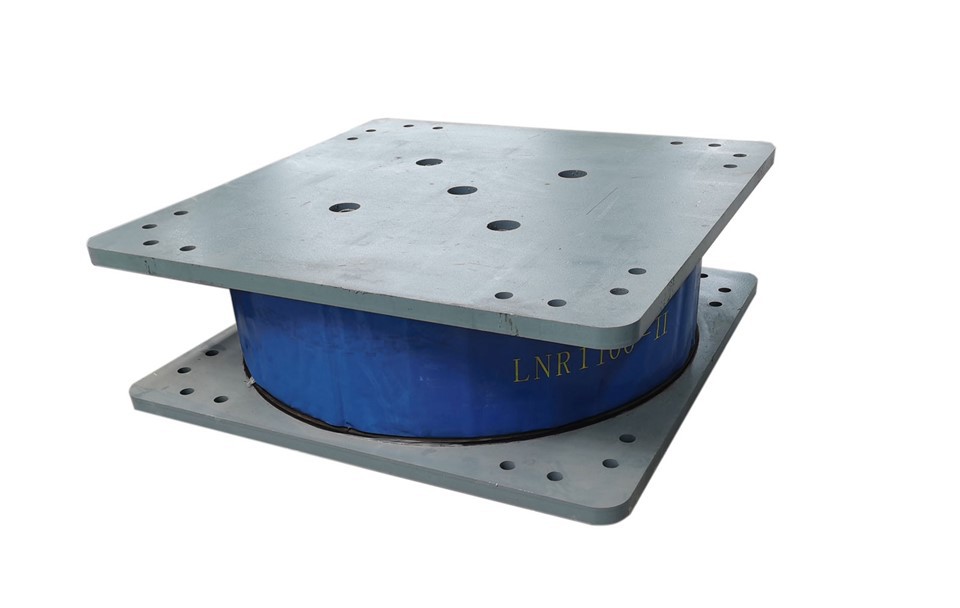


Elastomeric Isolator & Bearingproduct manual

I. Introduction
Elastomeric isolators and bearings, Elastomeric isolator, or Elastomeric bearings are essential structural components used in civil and bridge engineering to control the transfer of loads and movements between superstructure and substructure elements. Their main objective is to provide flexibility in the horizontal direction while maintaining high vertical stiffness. This enables a structure to accommodate temperature-induced expansion, creep, shrinkage, and seismic displacements safely, without excessive stress concentration.
The use of elastomeric materials-primarily natural rubber (NR), chloroprene (CR), and ethylene-propylene-diene monomer (EPDM)-has revolutionized bridge and building design. These polymers exhibit high resilience, damping, and long-term durability under compression and shear. Since the mid-20th century, elastomeric bearings have gradually replaced metallic bearings due to their simplicity, corrosion resistance, and maintenance-free characteristics.
In seismic isolation systems, elastomeric isolators play a critical role by extending the structural vibration period, reducing transmitted accelerations, and dissipating energy during ground motion. Their use is widespread across Europe, North America, and Japan, particularly in base-isolated hospitals, viaducts, and public buildings.
II. Classification of Elastomeric Devices
Elastomeric isolators and bearings can be broadly categorized according to their mechanical characteristics, material composition, and functional objectives. The major types include:
(a) Plain Elastomeric Bearings – consist solely of alternating layers of rubber and steel shims without any additional damping or sliding mechanism. They are designed primarily to accommodate rotations and small translations while supporting vertical loads. Suitable for short-span bridges and low-rise buildings with moderate seismic demand.
Applications: Highway and railway bridges, industrial facilities, and non-seismic structures.

(b) Laminated Elastomeric Bearings – feature multiple rubber layers reinforced by thin steel plates to control bulging and enhance vertical stiffness. Provide horizontal flexibility while maintaining load capacity, making them the most common choice in bridge structures and industrial applications.

(c) Lead Rubber Bearings (LRB) – incorporate lead cores into the elastomeric body to add hysteretic energy dissipation capability. The lead yields during earthquakes, providing significant damping and re-centering capability. Widely used in base-isolated buildings and long-span bridges.
Applications: Seismic isolation for bridges, hospitals, government and emergency response building.

(d) High-Damping Rubber Bearings (HDRb) – use specially compounded rubber materials with intrinsic damping characteristics. Provide combined stiffness and energy absorption without metal cores. Ideal for applications requiring maintenance-free operation and moderate energy dissipation.
Advantages: 10–20% damping, stable mechanical performance under wide temperature ranges.

(e) Sliding and Hybrid Elastomeric Isolators – integrate sliding elements (PTFE or stainless-steel interfaces) with elastomeric layers to achieve large displacement capacities while controlling shear strain. Hybrid isolators combine friction pendulum systems and elastomeric flexibility for multi-directional isolation.
Applications: Long-span bridges, industrial plants, and projects requiring tailored seismic performance.

II. Design Principles and Performance Criteria
Design objectives for elastomeric isolators include:
- Extending the structure's natural period to reduce acceleration response.
- Ensuring adequate vertical stiffness and horizontal flexibility.
- Providing self-centering capability and fatigue resistance.
Key design parameters include:
- Shear Modulus (G): Determines horizontal stiffness and deformation capacity.
- Shape Factor (S): Ratio of loaded area to free bulging area of rubber, controlling vertical stiffness.
- Effective Damping: Defines energy dissipation per cycle.
- Allowable Shear Strain: Typically limited to 100–125% under service conditions.
- Temperature and Aging Resistance: Ensures long-term stability.
Performance verification involves dynamic tests such as shear fatigue, aging, ozone exposure, and ultimate load capacity tests per EN 15129:2018, AASHTO M251, and JIS K 6251.
IV. Design Standards / Design Codes
Several international and regional standards govern the design, testing, and quality assurance of elastomeric isolators and bearings:
* EN 15129:2018 – *Anti-Seismic Devices*: Defines design, performance, and test requirements for European CE-marked isolators.

* EN 1337-3 – *Structural Bearings: Elastomeric Bearings*: Specifies design equations and material limits for bridge applications.

* AASHTO LRFD Bridge Design Specifications – U.S. standard governing structural bearing design and testing.

* ASTM D4014 / M251 – Provides material property and test requirements for elastomeric bearings.


* JIS A 6410 & MLIT/BCJ Guidelines – Regulate seismic isolation systems and approval procedures in Japan.
* ISO 22762 Series – International standards harmonizing testing procedures for elastomeric isolators and laminated bearings.
Each standard emphasizes mechanical reliability, long-term durability, and material traceability. European manufacturers must demonstrate conformity through CE marking under the Construction Products Regulation (CPR) (EU 305/2011).

V. Testing and Quality Control
Testing ensures compliance with design intent and consistency of performance. Key test categories include:
1. Material Property Tests – Tensile, elongation, hardness, ozone resistance, and compression set (ISO 37, ISO 815).
2. Prototype Tests – Conducted on full-scale units to validate design stiffness, damping, and load capacity.
3. Type Tests – Performed once per design to confirm conformity with EN 15129 and ISO 22762.
4. Routine Production Tests – Include shear stiffness, hardness, and visual inspection.
5. Aging and Environmental Resistance – Evaluate performance after exposure to temperature cycling, ozone, and UV radiation.
Manufacturers must implement Factory Production Control (FPC) under ISO 9001 or equivalent quality systems to maintain consistent product performance.
VI. International Certification Frameworks
(a) CE / CPR and ETA Certification (Europe)
Under the Construction Products Regulation (CPR) EU No. 305/2011, elastomeric isolators and bearings marketed in the European Union must carry CE marking. CE compliance demonstrates conformity with essential performance requirements: mechanical resistance, safety in use, durability, and environmental sustainability.
Manufacturers must obtain ETA (European Technical Assessment) when harmonized standards are not available.
For elastomeric isolators, relevant EADs include:
- EAD 200021-00-0106 – Elastomeric isolators
- EAD 200022-00-0106 – Sliding isolators
- EAD 200023-00-0106 – Hybrid seismic devices
Once an ETA is issued, the manufacturer undergoes factory production control (FPC) and third-party assessment by a Notified Body, leading to CE marking.
(b) AASHTO and FHWA Certification (United States)
In the United States, elastomeric bearings and isolators follow AASHTO LRFD Bridge Design Specifications and the AASHTO Guide Specifications for Seismic Isolation Design. Testing and qualification are often reviewed by the Federal Highway Administration (FHWA) or state Departments of Transportation.
Quality certification typically involves: - AASHTO M251 / ASTM D4014 for elastomeric bearings - Prototype and production testing under AASHTO T223 and T222
(c) MLIT and BCJ Certification (Japan)
The Ministry of Land, Infrastructure, Transport and Tourism (MLIT) and the Building Center of Japan (BCJ) approve seismic isolation devices after dynamic tests demonstrating endurance and stability under multi-directional loading. Japan's standards emphasize lifecycle monitoring and traceability.
VII. Installation and Maintenance
Proper installation is essential for ensuring long-term performance.
Key recommendations include:
* Surface Preparation: Bearing seats must be level, smooth, and free of dust or debris.
* Alignment: Bearings should be installed under uniform contact pressure to prevent eccentric loading.
* Anchorage: For seismic isolators, mechanical restraints or dowels may be required to resist uplift or sliding.
* Protection: Bearings exposed to UV or ozone should be shielded using protective coatings or housings.
* Maintenance: Regular inspection every 3–5 years is recommended to check for rubber cracking, bulging, or steel corrosion.
* Replacement: Bearings may require replacement after 30–50 years depending on load history and environmental exposure.
VIII. Emerging Technologies and Innovations
Recent research and industrial developments have introduced advanced materials and digital tools:
* Nano-Reinforced Rubber: Graphene and silica nanoparticles enhance strength and reduce creep.
* Fiber-Reinforced Elastomers: Provide directional stiffness and fatigue resistance.
* Smart Bearings: Embedded sensors for real-time strain and temperature monitoring.
* Recyclable Elastomers: Bio-based polymers and sustainable production reduce carbon footprint.
* 3D Finite Element Simulation: Enables accurate prediction of shear behavior and long-term deformation.
* AI Predictive Maintenance: Machine learning models analyze sensor data to forecast degradation trends.
These innovations mark the transition toward intelligent and sustainable structural protection systems.
IX. Comparison and Application Guidance

Selection depends on the seismic demand, stiffness of superstructure, and expected displacement.
Design codes such as EN 15129 and AASHTO LRFD provide criteria for isolator selection based on fundamental period extension and damping requirements.
X. Future Outlook
The future of elastomeric isolators lies in intelligent design, sustainability, and global harmonization. Emerging trends include:
* Integration of digital twins for monitoring structural response in real time.
* Use of AI-based optimization for isolation system design.
* Adoption of green rubber technologies to reduce carbon emissions.
* Harmonization of EN, AASHTO, and ISO standards for unified certification.
As global infrastructure resilience becomes a key priority, elastomeric isolators will continue to play a vital role in ensuring both safety and sustainability.
XI. Conclusion
Elastomeric isolators and bearings are vital components for modern infrastructure, offering flexibility, damping, and long-term stability under various loading conditions. Their effectiveness depends on strict adherence to international standards, quality manufacturing, and proper installation.
Ongoing innovations in material science and digital monitoring will further enhance their role in ensuring seismic resilience and lifecycle efficiency.
References
1. EN 15129:2018 – Anti-Seismic Devices
2. EN 1337-3 – Structural Bearings: Elastomeric Bearings
3. ISO 22762 Series – Elastomeric Seismic-Isolation Bearings
4. AASHTO LRFD Bridge Design Specifications
5. AASHTO M251 – Plain and Laminated Elastomeric Bearings
6. ASTM D4014 – Standard Specification for Plain and Laminated Bearings
7. JIS K6410 ing Method for Rubber Bearings
8. MLIT / BCJ Approval Guidelines for Seismic Isolation Systems
9. EAD 200021-00-0106 and EAD 200023-00-0106 – European Assessment Documents for Elastomeric and Seismic Devices

Hot Tags: elastomeric isolator, China elastomeric isolator manufacturers, suppliers, seismic isolation couplings, seismic isolation testing products, seismic isolation regulation products, seismic isolation hospitality products, seismic isolation radon, seismic isolation hydrogen


