


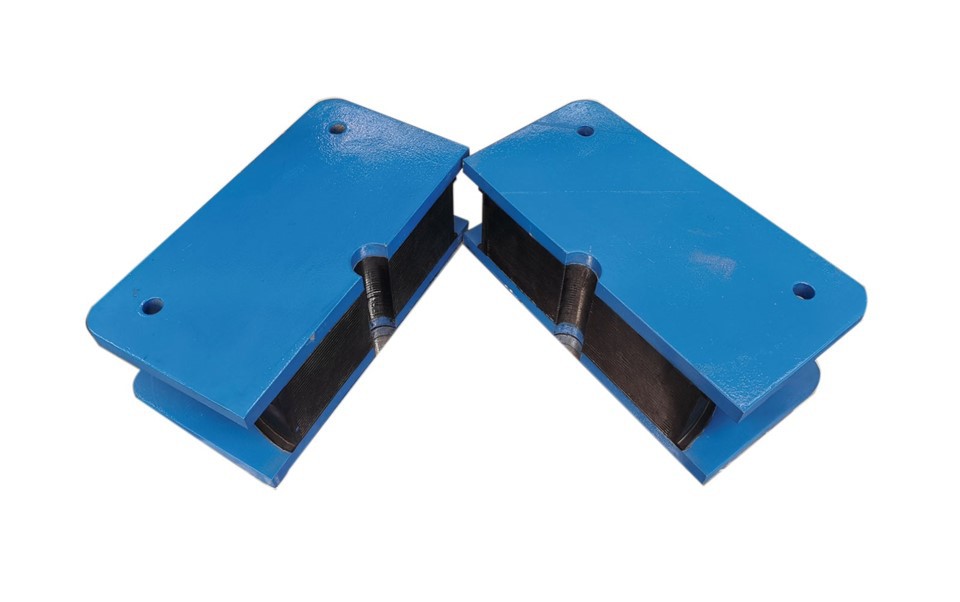


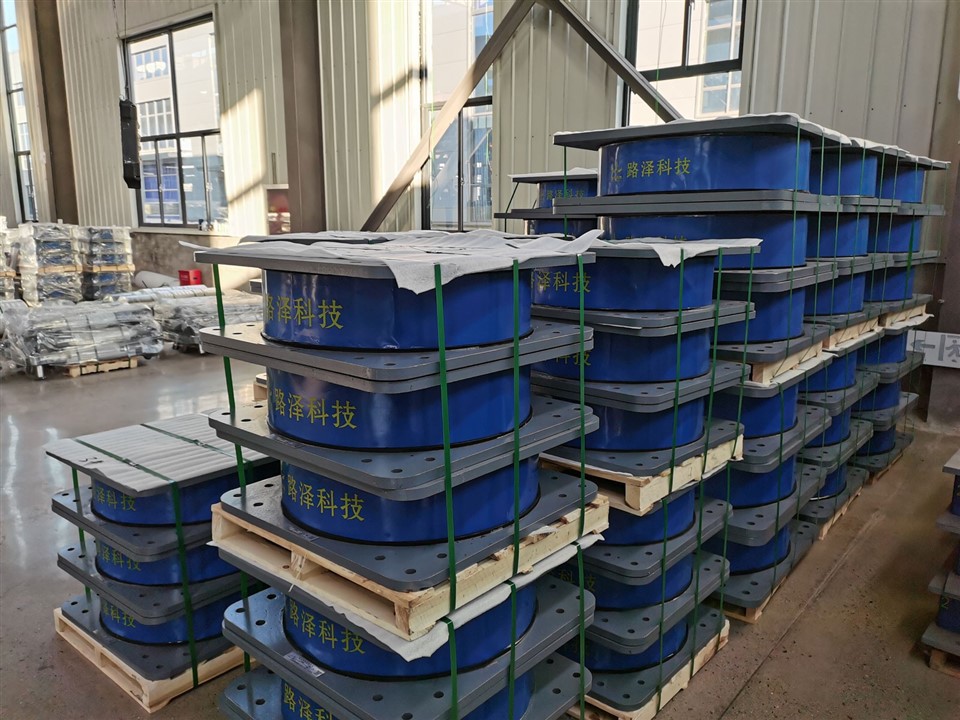
Lead Rubber Bearing (LRB)
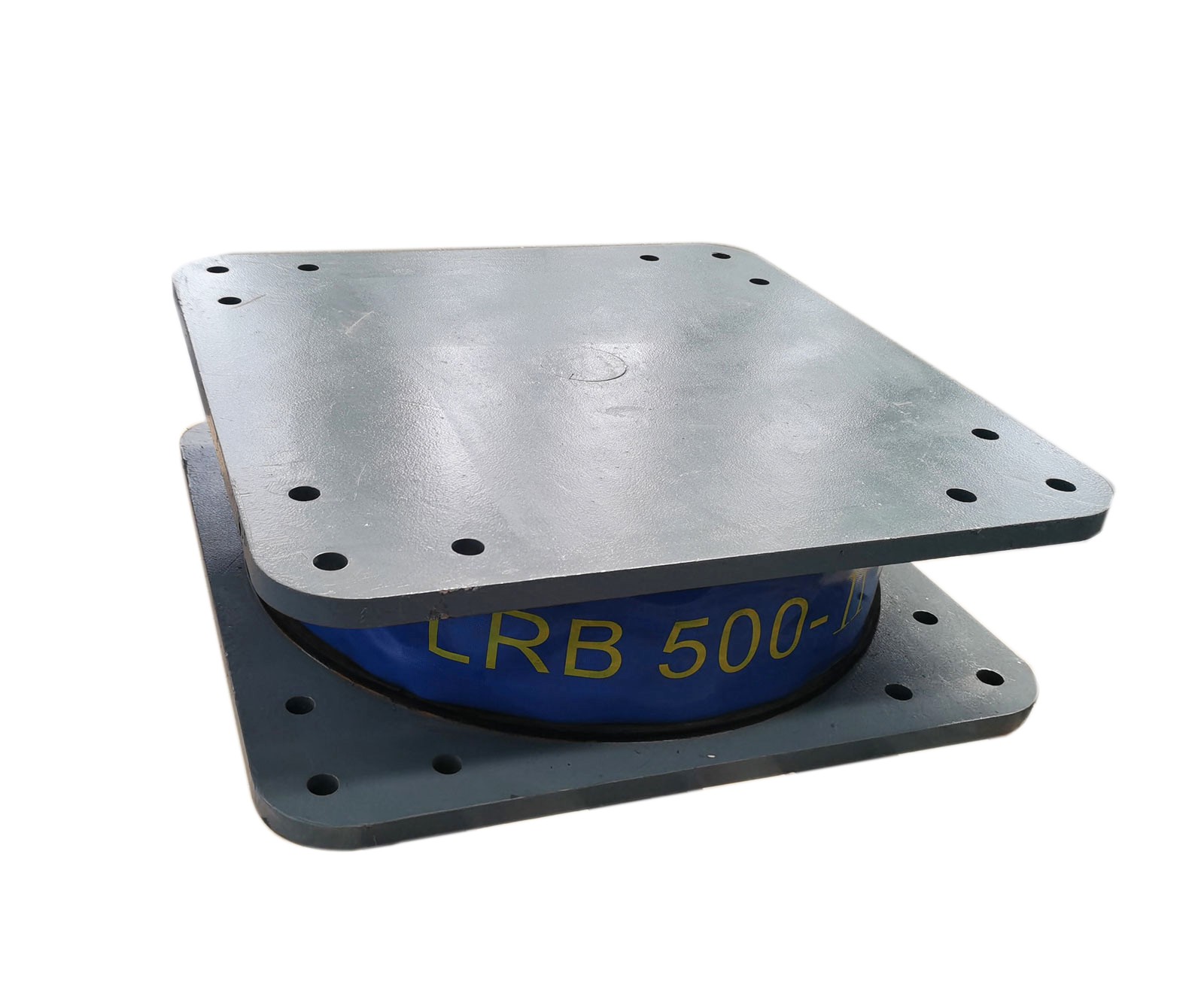
Products Description
Lead Rubber Bearing (LRB) is one of the most widely used seismic isolation devices in the field of building seismic isolation engineering at present. The lead core rubber bearing is a composite seismic isolation device that combines high-elasticity rubber and a high-energy-consuming lead core or lead rod. Through the dual mechanisms of flexible seismic isolation and energy dissipation, it significantly reduces the damage to building structures caused by dynamic loads such as earthquakes and strong winds. Its core technologies are based on:
• Rubber layer or rubber shim: It provides horizontal flexibility and vertical support.
• Lead core: It utilizes plastic deformation to absorb seismic energy (the energy dissipation proportion can reach more than 70%).
• Multi-layer steel plates: They enhance the vertical stiffness and prevent the bearing from buckling and losing stability.
This product complies with the international standard ISO 22762 and is suitable for high-intensity seismic areas and important facilities that are sensitive to vibrations. It is widely applied in bridges, buildings, and important infrastructure.
1, Basic Performance:
1.1,Energy Absorption Capacity of the Lead Damper
Rubber is of a material that can be easily stretched and compressed, and it will undergo huge deformation when force is applied after being made into a bearing. The rubber bearing used for seismic isolation is composed of thin steel plates and thin rubber shim stacked and pressed. The steel plates have an excellent restraining effect on the vertical deformation of the rubber, and the vertical compression stiffness is very high. However, As the natural rubber bearing, the tensile stiffness of the LRB bearing is relatively low, which is approximately 1/7 to 1/10 of the compression stiffness.
1.2, Horizontal Deformation Capacity of LRB
The steel plates restrain the vertical deformation of the rubber, but It has no impact on its horizontal deformation. At the same time, the lead core can follow the deformation of the bearing very well and absorb seismic energy. The horizontal performance of Lead rod rubber bearing is stable. Due to the existence of the lead core, it can limit the horizontal deformation of the bearing. The horizontal deformation of the LRB seismic isolation structure is smaller than that of the natural rubber bearing (without considering the effect of additional damping).
1.3, Working Characteristics of LRB
The lead rubber bearing adjusts the damping magnitude through the size of the lead core. After the diameter of the lead core increases, the yield force becomes larger and the damping amount increases. However, an excessively large central hole will also have an adverse impact on the performance of the bearing.
1.4, Durability of LRB Bearing
Engineering investigations in countries such as Japan have shown that the LRB bearing is basically the same as the natural rubber bearing. Even after 100 years of use, the rubber inside the bearing remains intact. Some investigations have shown that after 10 years of use of the LRB bearing, its characteristics remain basically unchanged, and it is predicted that its performance will only decrease by 3% after 60 years use.
1.5, Basic Mechanical Performance of LRB Bearing
1.5, Basic Mechanical Performance of LRB Bearing
The hysteretic performance of the lead rubber bearing can be represented by a bilinear model. The horizontal characteristics of the LRB bearing are the superposition of the horizontal performance of the rubber part and the lead core part. The lead rubber bearing can exhibit stable bilinear hysteretic characteristics when the shear deformation is 250%.

2, Product Structure and Manufacturing Process
2.1 Structure:

|
Components |
Materials and Processes |
|
Rubber shim |
Natural rubber (NR) or neoprene rubber, Vulcanized hardness (Shore A) 50±5, Ozone resistance grade ≥ Class 4. |
|
Steel Plate Interlayer |
Q355B hot-rolled steel plate, with a thickness of 2-5mm. The surface is treated by sandblasting (roughness Ra≥50μm). It is bonded with rubber through vulcanization. |
|
Lead Core |
Purity ≥ 99.99%, diameter 50-400mm. It is formed by the cold extrusion molding process, and the centering alignment error ≤ 1mm. |
|
Connecting/Locating Plate |
Q345B steel plate, with the surface hot-dip galvanized (zinc layer thickness ≥ 80μm). The embedded bolt holes are processed according to the ISO 898-1 standard. |

2.2, Manufacturing Process

1. Vulcanization Molding:
The rubber and the steel plate are vulcanized at 150℃ under a pressure of 15MPa for 60 minutes to ensure that the bonding strength between layers is greater than 6MPa.
2. Lead Core Embedding: The lead core is pressed into the prefabricated hole by hydraulic pressure, and the filling density is greater than 98%.
3. Post-treatment: The surface of the rubber bearing is coated with an anti-ultraviolet coating (in compliance with ASTM D5894 standard).
3. Performance Parameters and Testing Standards
3.1. Key Performance Indicators
|
Parameters |
Technical Range |
Testing Method |
|
Vertical Stiffness (KN/mm) |
500~10,000 |
GB/T 20688.2 Static Load Test |
|
Horizontal Stiffness |
0.5~3.0 (Initial Stage) |
ISO 22762-3 Hysteresis Curve Test |
|
Equivalent Damping Ratio |
15%~30%(When Deformation is 200%) |
EN 15129 Dynamic Loading Test |
|
Ultimate Deformation Capacity |
≥300%(No Tear in the Rubber Layer) |
JIS K 6394 Deformation Fatigue Test |
|
Fatigue Life |
≥5000 Cycles(±200% Shear Strain; Frequency 0.5Hz) |
ASTM D4014 Fatigue Test |
3.2, Environmental Adaptability
1, Temperature range: -40°C to +70°C (an additional thermal insulation layer is required at high temperatures).
2, Corrosion resistance: No rusting after passing the salt spray test (GB/T 10125) for 1000 hours.
3, Fire protection rating: Meeting the flame-retardant requirements of Class B1 in GB 8624.
4, Inspecting facilities and testing reports.
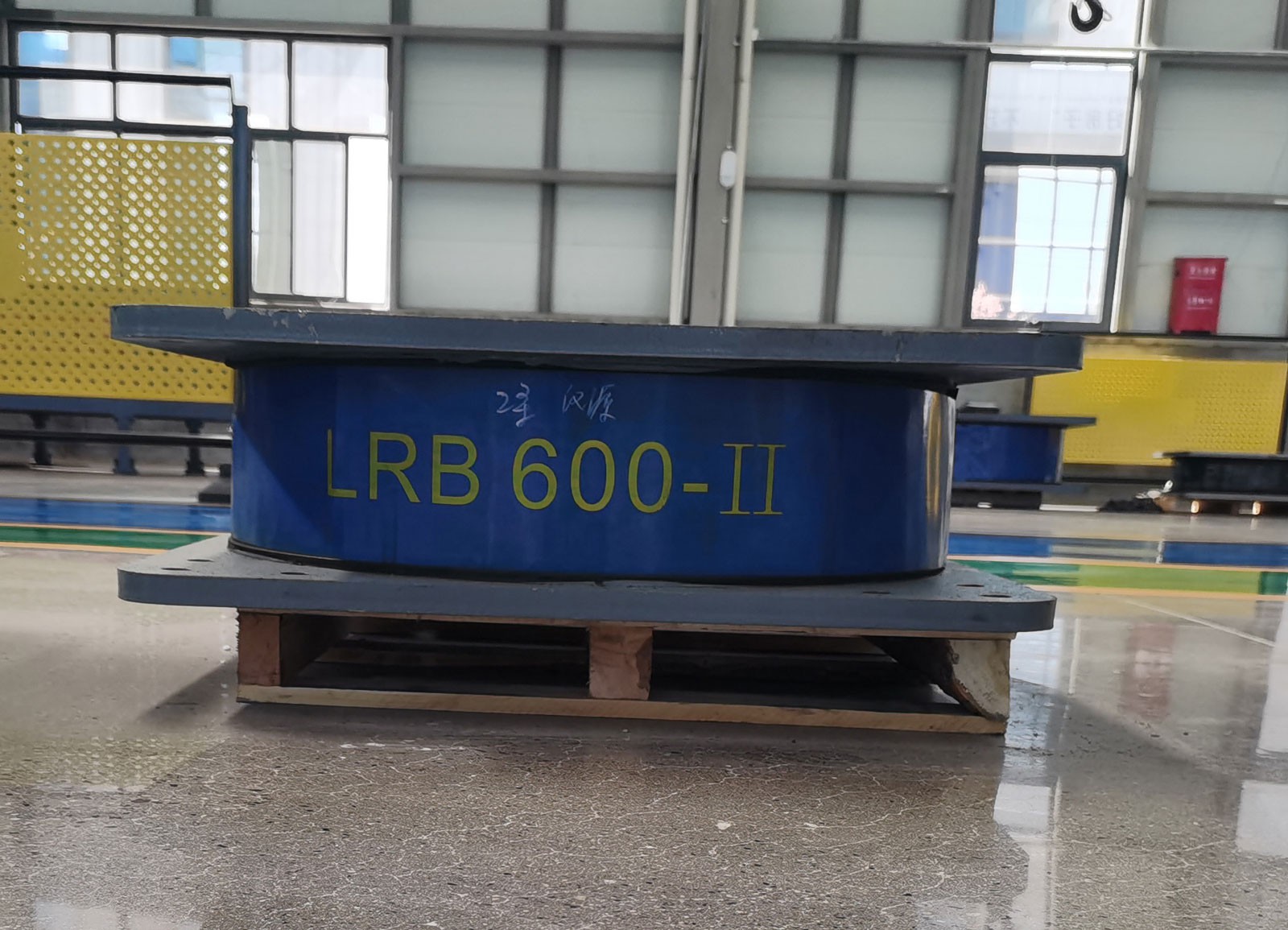
4.1,Inspecting Facilities


4.2, Type reports & Testing reports for bearing by the third party

4.3,Displacement Testing

which cannot be achieved by ordinary rubber bearing.
5, Selection and Design Guide
5.1 Selection Steps
1. Load Calculation:
Determine the vertical load (DL + LL) and the horizontal displacement requirement (multiply the displacement under the rarely - occurred earthquake according to the seismic code by 1.2).
2. Bearing Size:
Select according to the diameter (D):
D = 1.2 × Design Displacement + 50mm (minimum safety margin).
3. Damping Matching: It is recommended that the area ratio of the lead core should be 5% - 15%.
5.2 Design Software Support
A dedicated software, LRB Designer, is provided. It can import ETABS and SAP2000 models and automatically generate bearing parameters and installation drawings.


5.3, Specifications & Type
(only recommendation, it could be OEM or manufactured to drawing of Clients)
| Mechanical Performance Parameter Table(G = 0.34) of Type II Serialized Isolation Bearings with New Structure (3.0Tr = 0.55D (400 - 1600)) - Rubber Material Category (XL-03) - Region (Area B) |
|||||||||||||||
| Description items | Unit | LRB 400 |
LRB 500 |
LRB 600 |
LRB 700 |
LRB 800 |
LRB 900 |
LRB 1000 |
LRB 1100 |
LRB 1200 |
LRB 1300 |
LRB 1400 |
LRB 1500 |
LRB 1600 |
|
| Shear modulus | G | MPa | 0.34 | ||||||||||||
| Effective diameter | D | mm | 400 | 500 | 600 | 700 | 800 | 900 | 1000 | 1100 | 1200 | 1300 | 1400 | 1500 | 1600 |
| Middle hole diameter | mm | 65 | 80 | 100 | 120 | 130 | 150 | 180 | 190 | 200 | 220 | 260 | 260 | 260 | |
| The first shape coefficient S1 | S1 | / | 24.3 | 25.5 | 24.3 | 25.8 | 27.2 | 29.8 | 32.6 | 35.4 | 36.7 | 39.3 | 42.3 | 45.3 | 48.3 |
| The second shape coefficient S2 | S2 | / | 5.41 | 5.38 | 5.41 | 5.43 | 5.44 | 5.42 | 5.43 | 5.45 | 5.44 | 5.42 | 5.83 | 6.25 | 6.67 |
| Vertical stiffness | Kv | KN/mm | 1300 | 1900 | 2100 | 2500 | 2700 | 3200 | 3800 | 4300 | 4600 | 5800 | 6600 | 7200 | 8000 |
| Equivalent horizontal stiffness (100%) | Keq | KN/mm | 0.93 | 1.13 | 1.41 | 1.66 | 1.83 | 2.10 | 2.49 | 2.65 | 2.70 | 2.94 | 3.69 | 3.99 | 4.31 |
| Equivalent horizontal stiffness (250%) | KN/mm | 0.71 | 0.87 | 1.07 | 1.24 | 1.40 | 1.59 | 1.83 | 1.97 | 2.02 | 2.19 | 2.64 | 2.94 | 3.26 | |
| Equivalent damping ratio (100%) | ζ | % | 26 | 26 | 27 | 28 | 26 | 26 | 27 | 26 | 26 | 26 | 28 | 26 | 24 |
| Stiffness before yielding | Ku | KN/mm | 7.30 | 9.09 | 10.94 | 12.52 | 14.42 | 16.21 | 18.02 | 19.78 | 20.40 | 21.99 | 25.16 | 29.11 | 33.32 |
| Stiffness after yielding | Kd | KN/mm | 0.56 | 0.70 | 0.84 | 0.96 | 1.11 | 1.25 | 1.39 | 1.52 | 1.57 | 1.69 | 1.94 | 2.24 | 2.56 |
| Yield force | Qd | KN | 27 | 40 | 63 | 90 | 106 | 141 | 203 | 227 | 250 | 300 | 420 | 420 | 420 |
| Total thickness of the rubber layer | mm | 74 | 93 | 111 | 129 | 147 | 166 | 184 | 202 | 220.5 | 240 | 240 | 240 | 240 | |
| Flange plate thickness | mm | 20 | 20 | 23 | 27 | 30 | 34 | 38 | 38 | 40 | 42 | 42 | 44 | 48 | |
| Total height of the bearing | mm | 165 | 187 | 208 | 246 | 273.5 | 318 | 352 | 390.5 | 417.5 | 450 | 450 | 454 | 462 | |
| Mechanical Performance Parameter Table(G = 0.392) of Type II Serialized Isolation Bearings with New Structure (3.0Tr = 0.55D(400 - 1600)) - Rubber Material Category (XL-02) - Region (Area C) |
|||||||||||||||
| Description items | Unit | LRB 400 |
LRB 500 |
LRB 600 |
LRB 700 |
LRB 800 |
LRB 900 |
LRB 1000 |
LRB 1100 |
LRB 1200 |
LRB 1300 |
LRB 1400 |
LRB 1500 |
LRB 1600 |
|
| Shear modulus | G | MPa | 0.392 | ||||||||||||
| Effective diameter | D | mm | 400 | 500 | 600 | 700 | 800 | 900 | 1000 | 1100 | 1200 | 1300 | 1400 | 1500 | 1600 |
| Middle hole diameter | mm | 65 | 80 | 100 | 120 | 130 | 150 | 180 | 190 | 200 | 220 | 260 | 260 | 260 | |
| The first shape coefficient S1 | S1 | / | 24.3 | 25.5 | 24.3 | 25.8 | 27.2 | 29.8 | 32.6 | 35.4 | 36.7 | 39.3 | 42.3 | 45.3 | 48.3 |
| The second shape coefficient S2 | S2 | / | 5.41 | 5.38 | 5.41 | 5.43 | 5.44 | 5.42 | 5.43 | 5.45 | 5.44 | 5.42 | 5.83 | 6.25 | 6.67 |
| Vertical stiffness | Kv | KN/mm | 1400 | 2000 | 2200 | 2600 | 2800 | 3300 | 3900 | 4400 | 4700 | 6000 | 6800 | 7400 | 8200 |
| Equivalent horizontal stiffness (100%) | Keq | KN/mm | 1.01 | 1.24 | 1.54 | 1.81 | 2.00 | 2.29 | 2.70 | 2.88 | 2.95 | 3.21 | 3.99 | 4.34 | 4.71 |
| Equivalent horizontal stiffness (250%) | KN/mm | 0.79 | 0.98 | 1.20 | 1.39 | 1.57 | 1.78 | 2.04 | 2.20 | 2.27 | 2.46 | 2.94 | 3.29 | 3.66 | |
| Equivalent damping ratio (100%) | ζ | % | 23 | 23 | 24 | 25 | 23 | 23 | 24 | 23 | 23 | 23 | 25 | 23 | 21 |
| Stiffness before yielding | Ku | KN/mm | 8.42 | 10.48 | 12.61 | 14.44 | 16.63 | 18.69 | 20.77 | 22.80 | 23.59 | 25.42 | 29.09 | 33.65 | 38.53 |
| Stiffness after yielding | Kd | KN/mm | 0.65 | 0.81 | 0.97 | 1.11 | 1.28 | 1.44 | 1.60 | 1.75 | 1.81 | 1.96 | 2.24 | 2.59 | 2.96 |
| Yield force | Qd | KN | 27 | 40 | 63 | 90 | 106 | 141 | 203 | 227 | 250 | 300 | 420 | 420 | 420 |
| Total thickness of the rubber layer | mm | 74 | 93 | 111 | 129 | 147 | 166 | 184 | 202 | 220.5 | 240 | 240 | 240 | 240 | |
| Flange plate thickness | mm | 20 | 20 | 23 | 27 | 30 | 34 | 38 | 38 | 40 | 42 | 42 | 44 | 48 | |
| Total height of the bearing | mm | 165 | 187 | 208 | 246 | 273.5 | 318 | 352 | 390.5 | 417.5 | 450 | 450 | 454 | 462 | |
| Mechanical Performance Parameter Table(G = 0.49) of Type II Serialized Isolation Bearings with New Structure (3.0Tr = 0.55D (400 - 1600)) - Rubber Material Category (XL-01) - Region (Area D) |
|||||||||||||||
| Description items | Unit | LRB 400 |
LRB 500 |
LRB 600 |
LRB 700 |
LRB 800 |
LRB 900 |
LRB 1000 |
LRB 1100 |
LRB 1200 |
LRB 1300 |
LRB 1400 |
LRB 1500 |
LRB 1600 |
|
| Shear modulus | G | MPa | 0.49 | ||||||||||||
| Effective diameter | D | mm | 400 | 500 | 600 | 700 | 800 | 900 | 1000 | 1100 | 1200 | 1300 | 1400 | 1500 | 1600 |
| Middle hole diameter | mm | 65 | 80 | 100 | 120 | 130 | 150 | 180 | 190 | 200 | 220 | 260 | 260 | 260 | |
| The first shape coefficient S1 | S1 | / | 24.3 | 25.5 | 24.3 | 25.8 | 27.2 | 29.8 | 32.6 | 35.4 | 36.7 | 39.3 | 42.3 | 45.3 | 48.3 |
| The second shape coefficient S2 | S2 | / | 5.41 | 5.38 | 5.41 | 5.43 | 5.44 | 5.42 | 5.43 | 5.45 | 5.44 | 5.42 | 5.83 | 6.25 | 6.67 |
| Vertical stiffness | Kv | KN/mm | 1500 | 2100 | 2300 | 2700 | 2900 | 3500 | 4000 | 4600 | 4900 | 6100 | 6900 | 7500 | 8300 |
| Equivalent horizontal stiffness (100%) | Keq | KN/mm | 1.17 | 1.44 | 1.78 | 2.09 | 2.32 | 2.65 | 3.10 | 3.23 | 3.34 | 3.63 | 4.47 | 4.90 | 5.35 |
| Equivalent horizontal stiffness (250%) | KN/mm | 0.95 | 1.18 | 1.44 | 1.67 | 1.89 | 2.14 | 2.44 | 2.55 | 2.66 | 2.88 | 3.42 | 3.85 | 4.30 | |
| Equivalent damping ratio (100%) | ζ | % | 21 | 21 | 22 | 23 | 21 | 21 | 22 | 21 | 21 | 21 | 23 | 21 | 19 |
| Stiffness before yielding | Ku | KN/mm | 10.53 | 13.10 | 15.77 | 18.05 | 20.78 | 23.36 | 25.97 | 27.34 | 28.69 | 30.92 | 35.38 | 40.93 | 46.86 |
| Stiffness after yielding | Kd | KN/mm | 0.81 | 1.01 | 1.21 | 1.39 | 1.60 | 1.80 | 2.00 | 2.10 | 2.21 | 2.38 | 2.72 | 3.15 | 3.60 |
| Yield force | Qd | KN | 27 | 40 | 63 | 90 | 106 | 141 | 203 | 227 | 250 | 300 | 420 | 420 | 420 |
| Total thickness of the rubber layer | mm | 74 | 93 | 111 | 129 | 147 | 166 | 184 | 202 | 220.5 | 240 | 240 | 240 | 240 | |
| Flange plate thickness | mm | 20 | 20 | 23 | 27 | 30 | 34 | 38 | 38 | 40 | 42 | 42 | 44 | 48 | |
| Total height of the bearing | mm | 165 | 187 | 208 | 246 | 273.5 | 318 | 352 | 390.5 | 417.5 | 450 | 450 | 454 | 462 | |
5.4, OEM or Manufacturing on drawing or samples
Our products would meet the standards of the European Union such as EN15129/EN1337 or the standards of the United States as ASCE 7 for OEM manufacturing, or production according to provided drawings and samples from clients.
6. Key Points of Installation and Construction
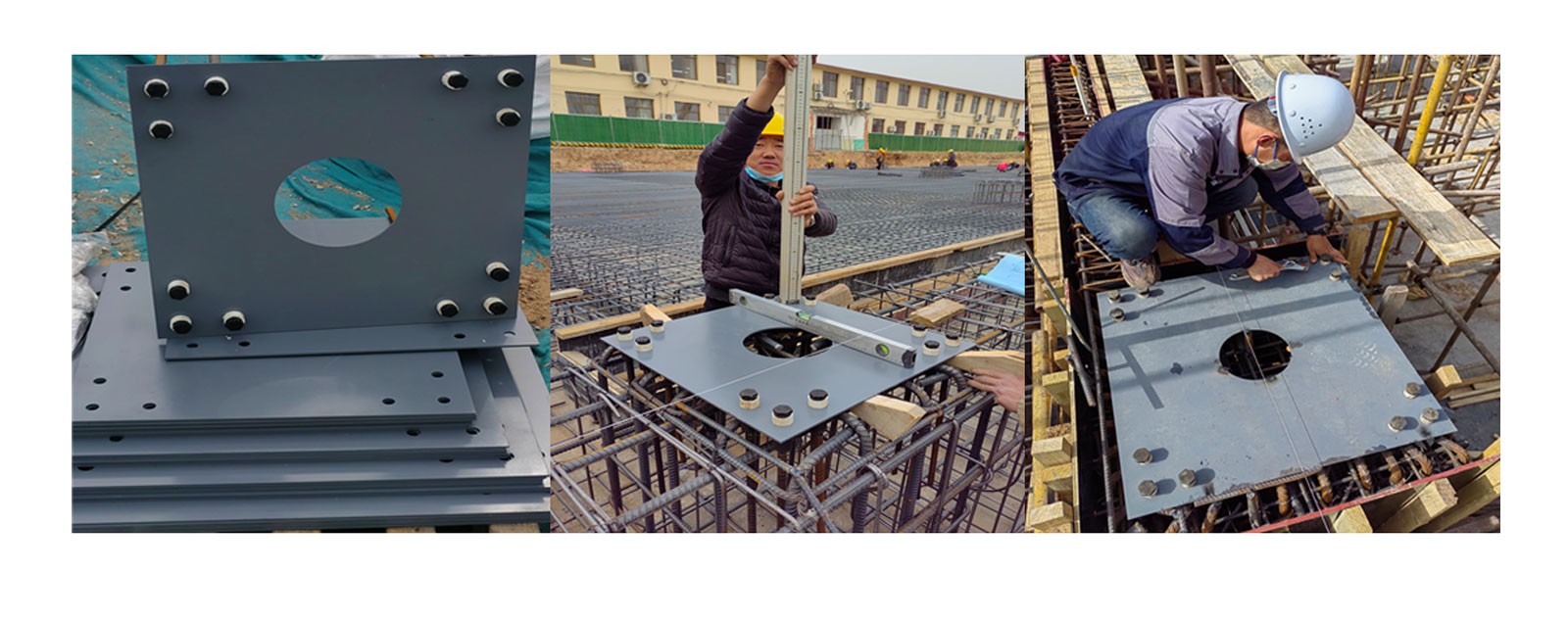
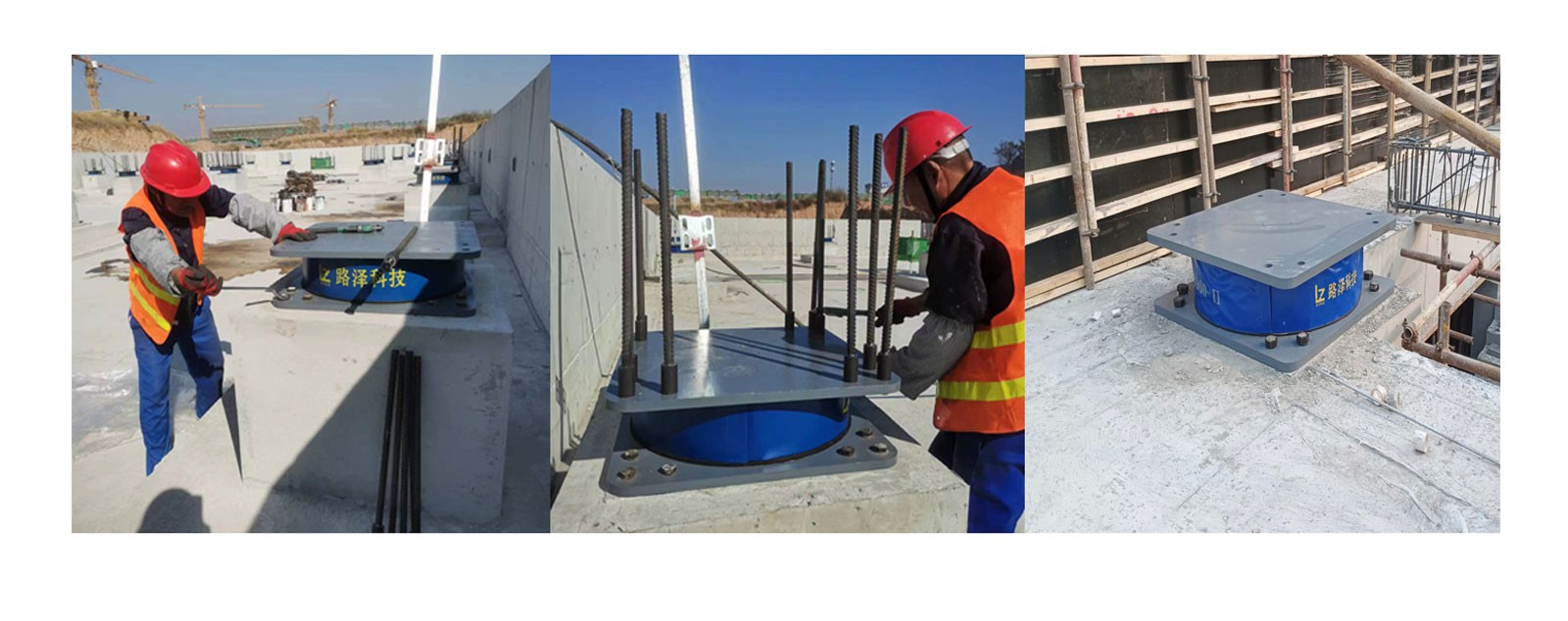
6.1. Installation Process
|
Steps |
Technical Requirements |
|
1. Foundation Preparation |
The strength of the concrete ≥ C40; the flatness ≤ 2mm/m; and the horizontal error of the embedded plate ≤ 0.1%. |
|
2. Bearing Positioning |
Use a total station for positioning. The central deviation ≤ 3mm, and the direction mark shall be consistent with the main seismic direction. |
|
3. Welding Fixation |
Continuous fillet weld (the leg height of the weld ≥ 8mm), and avoid the heat-affected zone covering the part of the lead core. |
|
4. Acceptance Inspection |
Use a laser displacement meter to detect the initial position, and record the reference data (filed for future reference). |
6.2, Treatment of Special Working Conditions
1, Inclined Installation: When the slope is greater than 5%, an anti-sliding and limiting device needs to be added.
2, Large-span Structure: The height difference between adjacent bearings needs to be adjusted by using shims, and the thickness difference should be ≤ 2mm.
6.3, The installation procedure picture is as following


7, Maintenance and Monitoring
7.1, Items for Regular Inspection
|
Cycle |
Inspection Content |
|
Annually |
Cracks on the rubber surface (depth ≤ 2mm), integrity of the lead core protective cover |
|
After earthquaking |
Measure the residual displacement (allowable value ≤ 10% of the design displacement), check the torque of the connecting bolts (≥ 90% of the design value) |
|
Every 5 years |
Sampling inspection of the hysteretic performance by a third-party professional institution (the energy dissipation capacity decreases ≤ 15%) |

7.2 Intelligent Monitoring System (Optional)
Equipped with built-in FBG fiber optic sensors, it can monitor the deformation, temperature and stress status of the bearing in real time, and the data can be connected to the BIM platform.
8, Quality Certification and After-sales Service
8.1, Certification Standard:
The product has passed the EU CE certification (under the standard EN 15129/EN 1337).
8.2, Quality Assurance Commitment:
Providing lifetime technical services and respond to on-site issues within 48 hours.
8.3, Technical Documents:
Type inspection reports, third-party type inspection reports, and product ex-factory reports would be provided.
9, Engineering Cases
1. Bridge Application
Project Name: Mihe Bridge
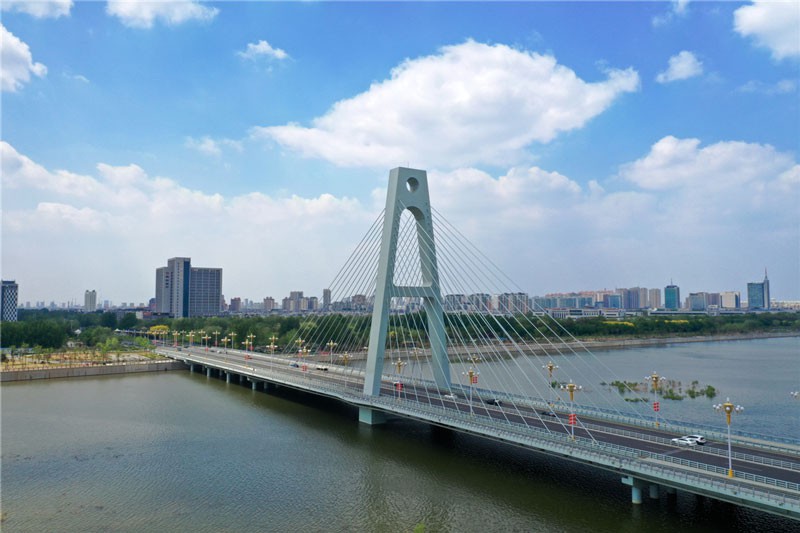
With a total investment of CNY232 million, it spans the main channel of the Mihe River. It is an east-west urban arterial road and, as one of the major arteries of the city's road network with the pattern of "eight vertical and six horizontal", plays a crucial role in urban traffic.
The total length of the bridge is approximately 1,139 meters, with the bridge proper being 449 meters long and 38 meters wide. It has six lanes in both directions. The road is classified as an urban arterial road, with a designed speed of 60 kilometers per hour. The main bridge features an A-shaped pylon which is a cable-stayed bridge.
After the completion of this bridge, the flood control capacity of the river section in the urban area will be greatly enhanced, ensuring the safety of people's property. It is of great significance for promoting the high-quality development of the economic society and is an achievement for the present and benefits for the future
2, Building application
Project name: The Project of Deqin County People's Hospital
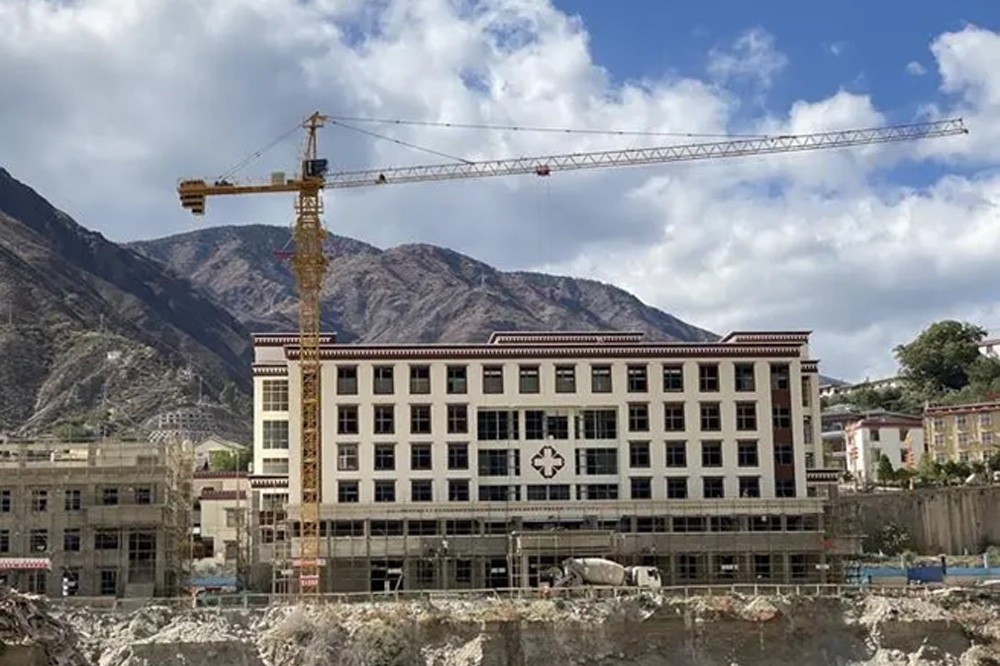
The hospital covers an area of 14652 square meters, with a total building area of 12,000 square meters. The main business buildings include the comprehensive outpatient building, the comprehensive inpatient building, the hyperbaric oxygen chamber building, the building for traditional Chinese and Tibetan medicine, and the infectious disease building.
Hot Tags: lead-core rubber bearings(lrb), China lead-core rubber bearings(lrb) manufacturers, suppliers, seismic isolation building products, seismic isolation platinum, seismic isolation gas processing plant products, seismic isolation performance products, seismic isolation cultural products, seismic isolation power plant products


