


Buckling Restrained Brace (BRB): A Comprehensive Guide to Seismic Energy Dissipation Devices

In the realm of structural engineering and seismic protection, Buckling Restrained Braces (BRBs) have emerged as a game-changing solution for enhancing the earthquake resistance of buildings and bridges. As a high-performance seismic energy dissipation device, BRBs address the critical flaw of conventional steel braces-buckling under compression-by delivering stable, symmetric performance in both tension and compression. This guide explores the structural composition, key functions, connection types, and applications of BRBs, providing essential insights for engineers, contractors, and project stakeholders seeking reliable seismic protection solutions.
At its core, a Buckling Restrained Brace is a precision-engineered assembly designed to act as a "structural fuse" during seismic events. Unlike traditional steel braces, which lose stiffness and bearing capacity when buckling under compression, BRBs maintain consistent mechanical performance, dissipating seismic energy through controlled plastic deformation while protecting the main structure from severe damage. This unique capability makes BRBs an indispensable component in modern seismic design, widely adopted in high-rise buildings, large-span venues, and seismic retrofitting projects worldwide.
The structural composition of a BRB is carefully designed to ensure optimal performance, with two primary configurations: horizontal composition and longitudinal composition. Horizontally, a BRB comprises four key components that work in harmony to deliver stable seismic performance.
The Core Unit is the backbone of the BRB, serving as the main load-bearing and energy-dissipating component. Typically fabricated from low-yield-point steel, ordinary steel, or special steel, it features various cross-sectional forms-including I-shape, cross-shape, and H-shape-to suit diverse engineering needs. I-shaped sections are ideal for small-span structures, while H-shaped sections offer high flexural stiffness for large-span applications. Under axial force, the core unit yields and dissipates seismic energy through repeated tension and compression deformations, with its design optimized for critical mechanical indicators such as yield strength, ultimate strength, and elongation to ensure effective energy absorption during earthquakes.
Complementing the core unit is the Constraint Unit, which prevents the core from buckling under compression and maintains stable mechanical properties even under large deformations. Common materials for the constraint unit include steel pipes, concrete, or other high-performance composites, with steel pipe casings filled with concrete or specialized fillers being the most widely used form. A carefully designed gap is maintained between the constraint unit and the core unit to allow free expansion and contraction of the core during deformation, with the gap size determined by factors such as core dimensions, material properties, and project-specific requirements.
The Sliding Mechanism is a critical interface between the core unit and constraint unit, designed to reduce friction and ensure the core can slide freely during deformation. This mechanism is engineered to balance friction force, durability, and installation convenience, ensuring the BRB maintains consistent performance over its long service life. Without an effective sliding mechanism, friction between the core and constraint unit would hinder deformation, compromising the BRB's energy-dissipating capabilities.
Connecting the BRB to the main structure are the Connection Nodes, which play a vital role in transmitting forces from the brace to the building's beams, columns, and other structural components. Three primary connection types are used in BRB applications, each with distinct advantages and considerations to suit different project needs.
Welded Connection is favored for its high strength and integrity, creating a firm bond that can withstand large tensile, compressive, and shear forces. Completed during factory prefabrication, welded connections integrate the BRB seamlessly with the main structure, facilitating efficient force transmission and improving overall structural stability. However, this method requires strict quality control-poor welding can lead to cracks, pores, or heat-affected zones that reduce steel strength, and welded connections are non-detachable, making post-earthquake maintenance or replacement challenging.
Bolted Connection offers superior detachability, allowing for easy disassembly and replacement, which is ideal for retrofitting projects or structures requiring regular maintenance. By adjusting bolt tightening torque, engineers can precisely control connection stiffness and preload, ensuring reliable performance. Additionally, bolted connections avoid the high-temperature effects of welding, reducing the risk of steel performance degradation. On the downside, bolted connections have lower strength compared to welded ones, require more installation space, and incur higher costs due to the need for bolts, nuts, and washers.
Pin Connection is valued for its excellent rotational performance, allowing a certain degree of rotation to adapt to structural deformation during earthquakes and reduce internal forces. This connection type is easy to install, requiring no complex welding or bolt-tightening, and is suitable for braces of varying sizes. However, pin connections have limited load-bearing capacity, are prone to wear between pins and hole walls over time, and require high design and machining precision to ensure optimal performance.
Vertically, a Buckling Restrained Energy-Dissipation Brace consists of a middle energy-dissipation segment and two end connection segments. The energy-dissipation segment features specially designed core material that yields first during seismic events, prioritizing energy dissipation to protect the main structure. The end connection segments, made of high-strength steel, are securely attached to structural components via welding, bolting, or pinning, ensuring efficient load transmission and overall structural stability.
BRBs are renowned for their ability to deliver consistent, reliable performance across a wide range of applications. From high-rise and super-tall buildings to large-span stadiums, exhibition centers, bridges, and seismic retrofitting projects, BRBs provide a cost-effective, durable solution for enhancing seismic resilience. By eliminating buckling, ensuring stable energy dissipation, and offering flexible connection options, BRBs have become a cornerstone of modern seismic design, trusted by engineers worldwide to protect lives and property during earthquakes.
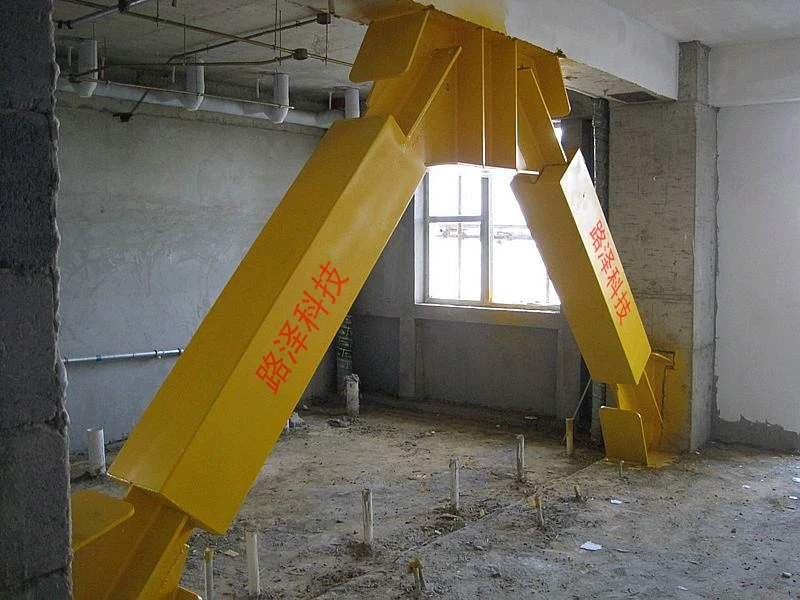
In summary, Buckling Restrained Braces (BRBs) represent a significant advancement in seismic protection technology. Their thoughtful structural composition-including the core unit, constraint unit, sliding mechanism, and connection nodes-ensures stable, symmetric performance in both tension and compression, making them superior to conventional steel braces. With versatile connection types and wide-ranging applications, BRBs are an essential choice for any project seeking to enhance seismic resilience, reduce maintenance costs, and ensure long-term structural safety.
