


OSHPD, OSP and OPM: Seismic Certification Requirements for Healthcare Facilities in California
Introduction
California is one of the most earthquake-prone regions in the United States. Due to the high seismic risk, healthcare facilities such as hospitals, medical centers, and emergency service buildings must meet extremely strict earthquake safety requirements to ensure structural safety and continuous operation after major seismic events.

OSHPD (Office of Statewide Health Planning and Development) was the former California state agency responsible for reviewing and regulating healthcare facility construction projects. In 2021, OSHPD was reorganized and renamed HCAI (California Department of Health Care Access and Information). However, many industry professionals still refer to the seismic approval system as OSHPD, especially in relation to healthcare facility seismic certification.
For manufacturers of seismic isolation bearings, energy dissipation devices, and earthquake-resistant equipment, OSHPD requirements represent one of the most demanding seismic performance standards in the United States.
OSHPD and Seismic Safety Requirements
OSHPD/HCAI focuses on ensuring that healthcare facilities can remain safe and functional after earthquakes. Unlike ordinary buildings that mainly require collapse prevention, hospitals must achieve a higher level of seismic performance, including:
Protection of patients and medical staff;
Continued operation of critical healthcare services;
Protection of medical equipment and building systems;
Rapid recovery after seismic events.
Healthcare projects are typically designed according to strict requirements from:
California Building Code (CBC);
California Administrative Code (Title 24);
ASCE/SEI 7 seismic design provisions;
Applicable seismic testing and certification requirements.
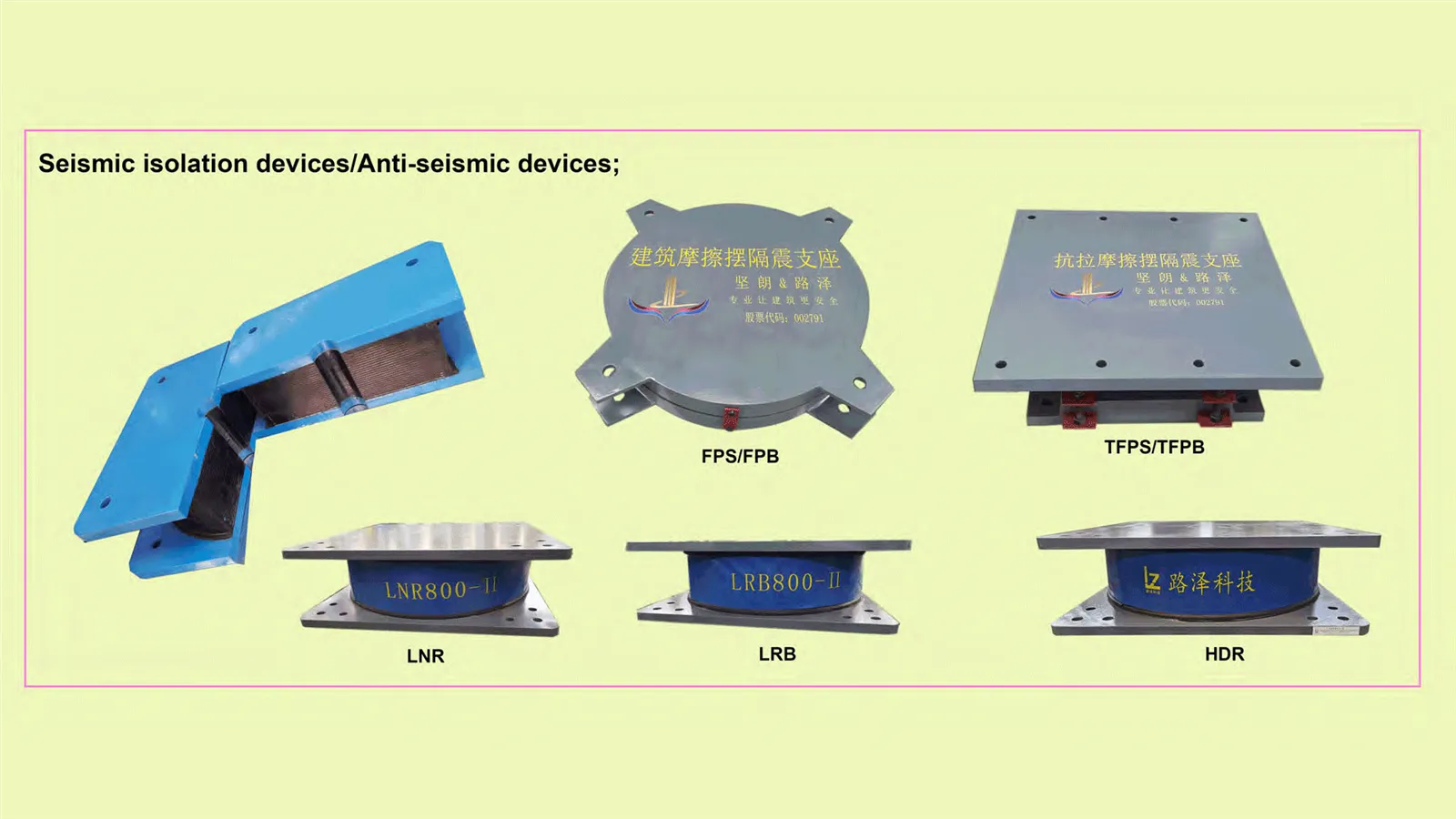
Seismic protection technologies widely used in healthcare facilities include:
Lead Rubber Bearings (LRB);
High Damping Rubber Bearings (HDRB);
Friction Pendulum Bearings (FPB);
Viscous Fluid Dampers (VFD);
Seismic restraint systems.
These technologies reduce earthquake forces, control structural movement, and improve building resilience.
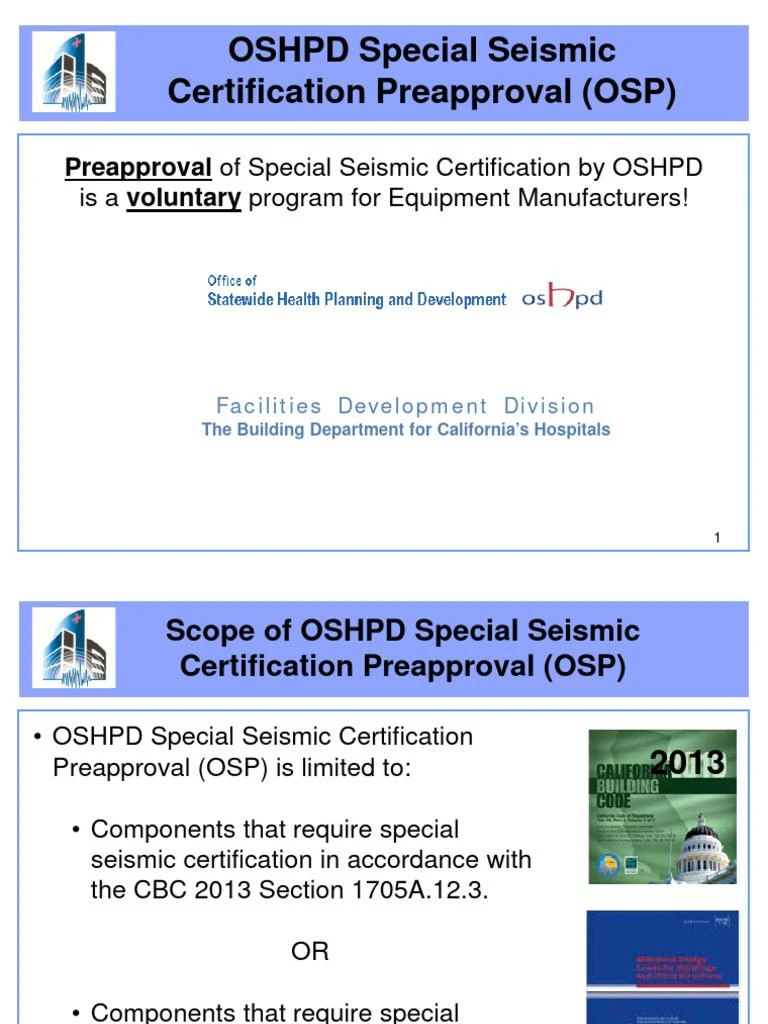
OSP – OSHPD Special Seismic Certification Preapproval
OSP (OSHPD Special Seismic Certification Preapproval) is a special seismic certification program developed for equipment and components installed in California healthcare facilities.
The purpose of OSP is to verify that specific products can withstand earthquake forces and continue to perform their intended functions after seismic events.
OSP certification is commonly applied to:
Medical equipment;
Mechanical equipment;
Electrical systems;
Emergency power equipment;
HVAC components;
Other nonstructural building systems.
The OSP approval process generally includes:
Seismic Testing
Products may require:
Shake table testing;
Horizontal and vertical seismic loading tests;
Functional performance verification;
Anchorage and connection evaluation.
Engineering Documentation
Manufacturers must provide:
Product specifications;
Structural calculations;
Installation requirements;
Test reports;
Quality control documentation.
OSP certification provides confidence for engineers, contractors, and healthcare owners that products have verified seismic performance.
OPM – Office Preapproval of Manufacturer
OPM (Office Preapproval of Manufacturer) focuses on the qualification of manufacturers producing standardized seismic products or systems.
The objective of OPM is to confirm that manufacturers have the capability to consistently produce reliable seismic components through:
Approved manufacturing processes;
Quality management systems;
Product testing procedures;
Factory inspection and documentation control.
OPM is especially important for manufacturers supplying repetitive seismic products used in healthcare projects.
Typical applications may include:
Seismic support systems;
Structural components;
Specialized earthquake-resistant devices;
Engineered building systems.
For seismic isolation and energy dissipation manufacturers, OPM demonstrates technical capability, production reliability, and compliance with strict healthcare facility requirements.
Importance of OSHPD Certification for Seismic Product Manufacturers
For companies producing seismic protection products such as LRB, HDRB, FPS, and Viscous Fluid Dampers, understanding OSHPD requirements is essential for entering the California healthcare market.
Successful approval requires:
Advanced seismic testing capabilities;
Reliable quality control systems;
Complete engineering documentation;
Compliance with U.S. seismic standards;
Proven product performance.
Conclusion
OSHPD, now HCAI, represents one of the highest levels of seismic safety requirements for healthcare facilities in the United States. Among its key programs, OSP and OPM provide important pathways for verifying seismic performance and ensuring product reliability.
For global manufacturers of seismic isolation systems and energy dissipation devices, achieving recognition within the OSHPD framework can significantly enhance market acceptance in California and throughout North America.
