AC2376 – Acceptance Criteria for Seismic Isolation Bearings: A Complete Guide & Comparison with EN 15129:2018
Meta Description: Understand ICC-ES AC2376 for seismic isolation bearings (LRB, HDRB, FPS). Learn key requirements, testing, and how AC2376 compares to EN 15129:2018 for global market access.
Introduction
Seismic isolation bearings are critical components that protect buildings, bridges, and infrastructure by decoupling structures from destructive ground motion during earthquakes. For manufacturers and engineers targeting the U.S. and international markets, compliance with rigorous technical standards is non-negotiable. AC2376 (Acceptance Criteria for Seismic Isolation Bearings) by the International Code Council Evaluation Service (ICC-ES) defines the benchmark for evaluating elastomeric and sliding seismic isolators to ensure compliance with U.S. building codes (IBC/IRC). This article breaks down AC2376's core scope, requirements, and testing protocols, and provides a detailed technical comparison with EN 15129:2018, the European standard for anti-seismic devices, to clarify key differences for global certification.
What is AC2376?
AC2376 is an acceptance criteria document developed by ICC-ES specifically for seismic isolation bearings. It establishes uniform technical specifications, test methods, and performance requirements that products must meet to receive an ICC-ES Evaluation Report (ESR)-a critical document for code compliance in the United States.
Scope & Covered Products
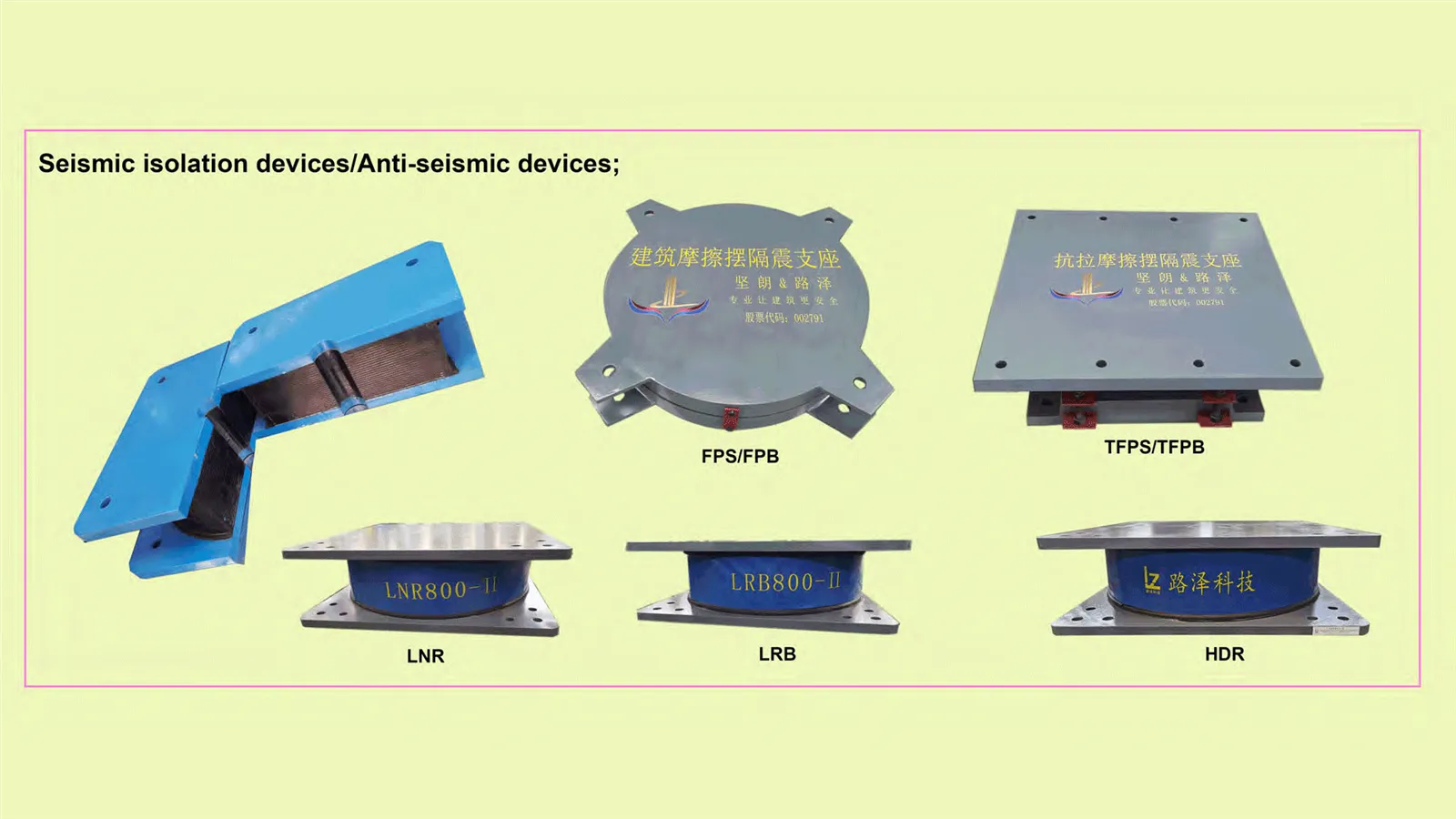
AC2376 applies to the following primary categories of seismic isolation devices:
Elastomeric Bearings
Low-Damping Rubber Bearings (LDRB)
High-Damping Rubber Bearings (HDRB)
Lead-Rubber Bearings (LRB) – incorporating a central lead core for energy dissipation.
Sliding Isolators
Friction Pendulum System (FPS) Bearings (Single, Double, Triple Concave)
Flat Sliding Bearings (e.g., PTFE-steel interfaces)
The standard governs design capacities, material specifications, prototype testing, quality control, and manufacturing verification. It explicitly references U.S. standards such as ASTM D412 (rubber tension), ASTM D395 (compression set), and AASHTO bridge specifications.
Core Requirements of AC2376
To achieve compliance, products must satisfy rigorous criteria across four key areas:
1. Design & Geometry Requirements
Shape Factors (S1 & S2): Mandate minimum values for internal (S1) and overall (S2) shape factors to prevent buckling and ensure stable hysteretic behavior.
Vertical Load Capacity: Must support sustained gravity loads (DL + LL) with minimal creep and no failure under maximum considered earthquake (MCE) vertical loads.
Displacement Capacity: Must safely accommodate design-level horizontal displacements (typically 100% to 250% shear strain for elastomers) without rupture or loss of function.
2. Material Specifications
Rubber: Strict controls on hardness, tensile strength, elongation, aging resistance, and low-temperature flexibility.
Steel: Reinforcing plates and end fittings must meet structural steel standards (e.g., ASTM A572 Grade 50) with corrosion protection.
Sliding Interfaces: PTFE, stainless steel, and chrome plating must meet friction and wear specifications.
3. Mandatory Testing Prototypes (Key Tests)
AC2376 requires full-scale prototype testing to validate performance:
Compression Testing: Verify vertical stiffness and stability under design loads.
Shear Testing: Characterize horizontal stiffness, yield strength, and equivalent damping ratio at 100% and 250% shear strain.
Cyclic Fatigue: Minimum 30 full cycles at design displacement to assess durability and stiffness degradation.
Ultimate Capacity: Test to 150% of design displacement to confirm a minimum safety factor.
Environmental Testing: Performance validation at extreme temperatures (-30°C to +60°C).
4. Quality Assurance (QA/QC)
Mandatory Factory Production Control (FPC) systems.
Regular third-party inspection by ICC-ES to ensure consistent material properties and manufacturing processes.
EN 15129:2018 – The European Standard for Anti-Seismic Devices
EN 15129:2018 (published by CEN) is the harmonized European standard governing anti-seismic devices. It is a broader standard than AC2376, covering not only isolation bearings but also energy dissipation devices (dampers) and rigid connections. Compliance with EN 15129 is required for the CE marking of seismic products sold in the European Economic Area (EEA).
Key Focus Areas of EN 15129:2018
Multi-Part Structure: Organized into multiple parts (e.g., Part 1: General, Part 6: Sliding Isolators) covering design rules, materials, testing, and AVCP (Assessment and Verification of Constancy of Performance).
Performance Categories: Classifies devices based on mechanical behavior (Displacement-Dependent, Velocity-Dependent).
Design Displacements: Defines testing at ULS (Ultimate Limit State) displacements, often amplified by a reliability factor (γX) and a 1.15 safety factor.
Testing Scope: Requires comprehensive cyclic testing, thermal testing, and long-duration fatigue tests (often >50 cycles).
AC2376 vs. EN 15129:2018 – Head-to-Head Comparison
The table below summarizes the critical technical and regulatory differences between the U.S. and European standards:
|
Parameter |
AC2376 (ICC-ES, U.S.) |
EN 15129:2018 (CEN, Europe) |
|
Primary Purpose |
Evaluates compliance with U.S. building codes (IBC) for market acceptance |
Harmonized standard for CE marking, defining performance for EU structural design (Eurocode 8) |
|
Product Scope |
Exclusively seismic isolation bearings (elastomeric & sliding) |
Broader: Isolation bearings, dampers, rigid connections, all seismic devices |
|
Geographic Authority |
Recognized across the U.S., Canada, and countries adopting IBC |
Mandatory for the EU/EEA; referenced in many national European codes |
|
Design Philosophy |
Prescriptive & Test-Heavy: Defines specific test protocols and pass/fail criteria |
Performance-Based: Focuses on demonstrating functional performance; more flexible design rules |
|
Key Test Levels |
Testing at 100% & 250% shear strain |
Testing at ULS displacement × γX × 1.15 |
|
Cyclic Testing |
30 cycles at design displacement |
Minimum 50 cycles, often more for durability |
|
Safety Factors |
Employs factors aligned with ASCE 7 & IBC |
Uses Eurocode partial factors (γM, γX) |
|
Certification |
Results in an ICC-ES ESR Report (required for code approval) |
Results in CE Certification via a Notified Body |
|
Quality Control |
ICC-ES conducts third-party factory audits |
Manufacturer's FPC audited by a European Notified Body |
|
Material Refs |
Primarily ASTM & AASHTO standards |
Primarily EN & ISO material standards |
Key Practical Differences
U.S. Market (AC2376): The ESR report is the primary document engineers and code officials require to approve the product. The testing is highly standardized and directly tied to IBC code requirements.
EU Market (EN 15129): The standard is more principles-based, allowing for some engineering judgment but requiring extensive documentation of performance. CE marking is the legal requirement for market placement.
Conclusion: Choosing the Right Standard for Global Expansion
For manufacturers of seismic isolation bearings:
Targeting North America: AC2376 compliance (and an ICC-ES ESR) is essential for code acceptance and project specification.
Targeting Europe: EN 15129:2018 compliance is mandatory for CE marking and market access.
Global Strategy: Many leading manufacturers certify to both standards, as the core mechanical performance tests share significant overlap (shear, compression, fatigue), allowing for efficient dual certification with minor adjustments to test protocols and documentation.
Understanding the nuances between AC2376 and EN 15129 is crucial for navigating regulatory barriers, ensuring structural safety, and successfully expanding into the world's largest seismic construction markets.