

If you've ever worked on a building, bridge, or any structure built to handle Mother Nature's curveballs, you've probably stumbled across terms like "seismic isolation bearings." As someone who's been supplying linear natural rubber bearings (LNRBs) for over a decade, I've heard every question under the sun about these products-but one that comes up way more than it should is, "Does the surface finish even matter?" Let me cut to the chase: it does. A lot. And if you're ignoring this tiny, often overlooked detail, you might be setting a project up for way more issues than you ever bargained for.
First, let's level set for anyone new to this space. Linear natural rubber bearings are the workhorses of seismic isolation. Unlike some of the more specialized options out there-like lead-core rubber bearings (LRB) that use a lead core to dissipate energy, or friction pendulum bearings (FPB) that glide on a curved surface, or even high damping isolation rubber bearings (HDRb) that rely on extra damping to absorb shock-LNRBs are all about consistent, linear movement under load. They're laminated rubber bearings, right? Wait, actually, sometimes people mix LNRBs with standard laminated rubber bearings-though LNRBs are a specific type designed for controlled, linear deflection without extra core materials or damping additives. If you want to compare how these stack up, you can check out our seismic isolation product page for context, but today we're zeroing in on that surface finish, because it's the unsung hero of how these bearings actually perform day-to-day (and during a big quake).
Let's start with what surface finish even means here. We're not talking about a shiny paint job or a smooth metal countertop. For LNRBs, the finish is the texture and uniformity of the two main contact surfaces: the top and bottom steel plates that attach the bearing to the structure above and below it, and sometimes the side edges where the rubber meets the outer steel retainers (called "end plates" or "flanges"). These plates are usually steel, so their surface is machined or treated to meet a specific roughness standard-think microscale bumps, scratches, and flatness, not something you'd notice with the naked eye. But that microscale detail is where all the function lives.
First big way surface finish impacts LNRBs: load distribution. LNRBs are designed to support massive weights-think bridges carrying thousands of tons, high-rises holding hundreds of apartments. If the contact surface of the bearing is rough or uneven, the load doesn't spread evenly across the entire bearing area. Instead, all the weight gets concentrated in tiny, high spots on the surface. That's called "stress concentration," and it's a bad, bad thing. Over time, that uneven pressure can warp the steel plates, tear the rubber lamination, or even cause the bond between rubber and steel to break. I've seen this firsthand on a small highway bridge project a few years back. The contractor cut corners on the bearing surface prep, using a sandblasting job that left inconsistent roughness instead of a controlled machined finish. Within three years, the bearings were showing signs of rubber delamination-something that would've been caught early if the surface was uniform. The bridge had to be closed for repairs, costing the state millions. All because of a surface detail that cost a few extra bucks to get right.
Next up, movement control-this is the whole point of a linear bearing, right? LNRBs are meant to move in a straight line when the ground shakes, absorbing energy instead of letting the structure shake with it. If the surface finish is too rough, that movement gets blocked. The micro-bumps on the steel plates catch on each other, creating friction that's not supposed to be there. Friction isn't inherently bad, but LNRBs are designed for low, consistent friction to allow linear, predictable movement. Too much friction from a bad finish can make the bearing "stick" instead of glide. When a quake hits, that stick-slip effect means the structure doesn't move as it's supposed to-so all the energy transfers right into the building, which is exactly what we're trying to avoid with seismic isolation.
I can also compare this to other isolation products to put it in perspective. Lead-core rubber bearings (LRB) use the lead core to add damping, so their surface finish matters less for movement control (the lead does most of the work), but their bond to the steel plates still needs a good surface. Friction pendulum bearings (FPB) rely on a smooth curved surface and a slider, so their finish has to be super tight to get the exact friction they need-but LNRBs have a flatter design, so their surface has to be uniform across the entire plate. If you look at our elastomeric isolator page, you'll see that even different types of isolators have unique surface needs, but LNRBs are especially sensitive because they don't have extra materials to compensate for surface irregularities.
Wait, let's talk about durability too. LNRBs are supposed to last 50, 75, even 100 years. That's not a short timeline. A rough or poorly finished surface doesn't just cause early delamination-it opens the door to corrosion. Steel plates with scratches or uneven areas trap moisture, salt (if you're working on a coastal project), or other debris. Over time, that corrosion eats away at the steel, weakening the plate, and if the steel gets too thin, it can't support the load. I once had a client in Florida call me because their LNRBs on a coastal bridge were rusting faster than expected. Turns out the contractor used a cheap steel plate with a poor surface finish-no proper treatment, so scratches held saltwater. We had to replace those bearings 20 years early, which was a huge hassle for them. A good surface finish (usually a machined, smooth steel surface that's then hot-dip galvanized or coated to resist corrosion) adds that extra layer of protection to keep the bearing working for its full lifespan.
Another thing: fit and alignment. When you install LNRBs, they have to line up perfectly with the structure's supports. If the surface of the bearing is warped or has inconsistent flatness, it's almost impossible to get that alignment right. Even a tiny tilt (like 1 degree) can throw off the load distribution and movement. Some guys try to shim the bearing to fix it, but shimming only covers up the problem-it doesn't fix the underlying surface issue. I always tell installers: if the bearing's surface doesn't sit flat when you place it on the support, send it back. Don't try to make it work. I've seen too many projects where shimming led to uneven loading, which caused bearing failure during a minor test quake.
Let's get technical for a sec, but keep it real. Surface finish is measured in Ra (roughness average)-that's the microscale height of the surface peaks and valleys. For LNRBs, we usually specify a Ra value between 1.6 and 3.2 micrometers. That's smooth enough to keep friction low and load even, but slightly textured so the rubber has a good surface to bond to. Wait, hold on-bond strength! I almost forgot that. The rubber in LNRBs is layered and bonded to the steel plates, right? The surface finish affects how well that bond holds. If the surface is too smooth, the rubber has nothing to "grab onto," so the bond is weak. That leads to delamination, which is a major failure mode. If the surface is too rough, you might get gaps in the bond where the peaks of the surface don't make contact with the rubber, which is the same problem. So it's a sweet spot-controlled roughness that's consistent across the entire plate, to make sure the rubber bonds evenly all over. That's why a good machine shop doesn't just rough up the surface; they do it uniformly.
I know what some of you are thinking: "This is just supplier jargon to charge more for a bearing." No, seriously-let's be honest. I've been in this game long enough to know that every contractor is watching their budget. But here's the math: a $200 difference in surface prep for a bearing now saves you $200,000 in repairs later. The bridge project I mentioned earlier? The extra $1,500 in surface prep for the bearings would've prevented $2 million in repair costs. That's not a winning trade.
Now, let's circle back to the big picture. LNRBs are a core part of seismic isolation systems. They work with other products-like the lead-core rubber bearings (LRB) for extra damping in some high-risk areas, or friction pendulum bearings (FPB) for sites that need larger movement-but LNRBs are the go-to for many projects because they're cost-effective and reliable. But their reliability only comes through if every detail is done right, and surface finish is one of the most important.
I've talked to a lot of engineers who don't think about surface finish when they're specifying bearings. They'll list load capacity, deflection range, material type-but they forget the surface. That's where we come in as suppliers. We don't just sell you a bearing; we walk you through every detail that makes it work. We'll tell you that a rough surface will kill movement control, that uneven plates cause stress concentration, that the Ra value needs to be just right for rubber bonding. We're not trying to confuse you-we're trying to make sure your project is safe, long-lasting, and doesn't end up in the news for a bearing failure.
If you're on a project right now specifying linear natural rubber bearings, ask your supplier about their surface finish specs. Don't be afraid to push for details. If they can't tell you their Ra value, or if their process is inconsistent, keep looking. I've seen too many projects cut corners here, and the results are never good.

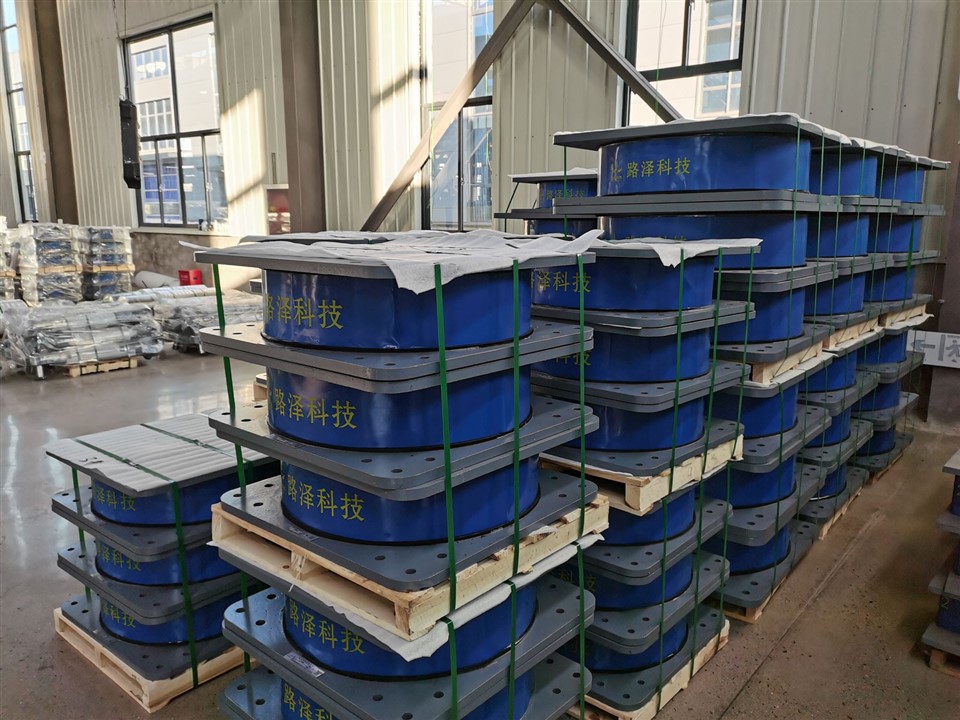
At the end of the day, the function of an LNRB boils down to three things: supporting load, moving linearly when needed, and lasting for decades. Surface finish affects all three. It's not a trivial detail-it's a critical part of the bearing's design that gets overlooked way too often.
If you're looking for reliable linear natural rubber bearings with precise surface finishes, or you want to compare our products with other seismic isolation solutions like laminated rubber bearings, high damping isolation rubber bearings (HDRb) for buildings, or elastomeric isolators for your next project, reach out to our team. We'd be happy to walk you through how surface finish meets performance, and help you find the right solution for your needs.
References:
- Kelly, J. M. (2013). Seismic Isolation of Structures. John Wiley & Sons.
- Skinner, R. I., Robinson, W. H., & McVerry, G. H. (2005). An Introduction to Seismic Isolation (2nd ed.). John Wiley & Sons.
- ASTM International. (2020). Standard Specification for Elastomeric Seismic Isolation Bearings for Buildings (ASTM E2397-20). ASTM International.
- Naeim, F., & Kelly, J. M. (1999). Design of Seismic Isolated Structures: From Theory to Practice. John Wiley & Sons.
- Building Seismic Safety Council. (2021). NEHRP Recommended Seismic Provisions for New Buildings and Other Structures. Federal Emergency Management Agency.