

When you walk through a city's downtown district, glance up at the steel beams holding a skyscraper in place, or watch a bus rumble over a highway bridge during your commute, you're looking at two very different infrastructure systems-one designed to withstand shaking from earthquakes, the other to protect people from flames if a disaster strikes. For years, my colleagues and I as anti-seismic products suppliers get asked one question constantly: "Do the products we use to keep buildings and bridges upright during earthquakes also help fight fires?" It's a question that makes total sense; disasters rarely strike alone. A 2011 study of the Tohoku earthquake, for example, documented that subsequent fires damaged over 1,000 buildings in Japan, many of which had already survived the initial seismic shaking. So today, let's break this down: do anti-seismic products have a fire-resistance function, and how do they work (or not work) alongside fire safety standards?
First, let's get clear on what anti-seismic products actually do. These aren't just metal brackets or rubber pads thrown on structures as an afterthought. They're engineered components that absorb, isolate, or redirect seismic energy to prevent buildings, bridges, and pipelines from collapsing when the ground moves. Our team works with everything from large bridge bearings to flexible connectors for building pipelines, all tested to strict global seismic codes. But fire resistance is a separate set of standards, focused on how materials hold up to high temperatures, prevent flame spread, or maintain structural integrity when heated above 1,000°F. The short answer is: most standard anti-seismic products are not designed as primary fire-resistant materials, but many of them work in surprising ways to reduce fire risk-or at least minimize its impact. Let's dive into the details.
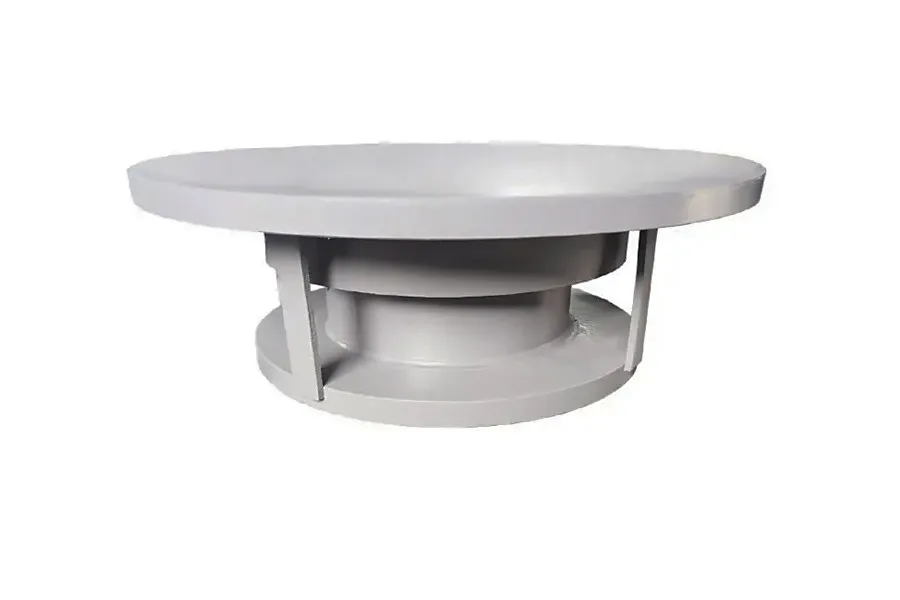
Take bridge infrastructure, one of the areas where anti-seismic products are most critical. A bridge's bearings are the parts that sit between the concrete pier and the bridge deck, allowing small movements from temperature changes while also sliding and rotating during an earthquake. For highway bridges, pot bearings and spherical seismic isolation bearings are two of the most common components. Let's start with pot bearings: these cylindrical steel and rubber assemblies are designed to handle heavy loads and seismic movement, with a precision-engineered piston that slides inside a steel housing. If you've ever wondered how these work for bridge applications, you can learn more about their design and load capacity here: Pot Bearing For Bridges Applications Under Structure Bearing. Now, do these have fire resistance features? The standard off-the-shelf pot bearing is made of carbon steel and neoprene rubber. Neoprene is somewhat heat-resistant, holding up to around 200°F for short periods, but at temperatures above 300°F, it starts to degrade-losing its elasticity, cracking, and failing to absorb seismic energy. That's a problem: if an earthquake causes a bridge's fuel tanks (or a nearby vehicle carrying flammable material) to catch fire, the heat could weaken the pot bearing long after the initial shaking.
Spherical seismic isolation bearings are another bridge staple, used for larger movement ranges than pot bearings. These have a convex steel surface that glides on a concave base, dampening seismic energy across a wider area. For highway bridge applications, SSIBs are engineered to reduce lateral movement during earthquakes, which can prevent bridge decks from shifting and colliding. But like pot bearings, standard SSIBs use steel and rubber components that don't meet fire resistance standards on their own. If the steel reaches temperatures above 1,100°F, its strength drops by half in as little as 15 minutes, which could cause the bearing to deform and the bridge to collapse. That's a key point: anti-seismic performance is tested at room temperature, while fire resistance is tested at extreme heat-so the two require different material considerations.
But not all anti-seismic products are made the same. Some specialized models do include fire-resistant modifications, and these are becoming more common as engineers design for "multi-hazard resilience" - the idea that infrastructure should survive earthquakes, fires, floods, and even extreme weather without collapsing. For example, flexible connectors for building pipelines are used to connect water, gas, and sewage lines, allowing the pipes to bend during an earthquake without breaking. If a pipe breaks and spills flammable material, that's a fire hazard-but high-quality flexible connectors can help prevent that. Our flexible connectors system of seismic isolation pipeline for buildings uses a reinforced rubber core with a stainless steel outer layer that resists punctures from seismic movement and can withstand temperatures up to 500°F for short durations. That's not enough to stand up to a sustained building fire, but it's a critical secondary feature that stops a small leak from turning into a large blaze after an earthquake.
Another component that often gets overlooked is the lead hinge, a small but powerful anti-seismic device used in buildings to dampen rotational movement during earthquakes. Lead has natural ductile properties that let it absorb seismic energy by deforming slowly, rather than transferring that energy to the building structure. But lead has a downside: at temperatures above 621°F, lead melts. That means a lead hinge exposed to fire would lose its ability to dampen movement, which could cause the building to shift even after the fire is put out. However, specialized lead hinges include a heat-resistant coating that raises their melting point to over 1,000°F, making them effective for both seismic and moderate fire exposure. You can learn more about these modified lead hinges here: Lead Hinge. This is a perfect example of how anti-seismic products can be adapted to add limited fire resistance, without being redesigned from scratch.
Now, let's talk about expansion joints for road bridges. These are the rubber or steel strips that sit between bridge decks, allowing the deck to expand and contract as temperatures change, and also absorbing seismic movement. Standard expansion joints are made of EPDM rubber, which is UV-resistant and flexible, but again, only holds up to around 250°F. If a fire breaks out on the bridge, the rubber expansion joint would melt, leaving a gap that lets debris or water seep into the bridge structure-and that gap could also allow flames to spread between different sections of the deck. But fire-resistant expansion joints, made with a fiberglass-reinforced rubber core and a steel outer casing, can hold up to 1,200°F for at least two hours, enough time for firefighters to put out the blaze. For details on how these work, check out: Expansion Joint For Road Bridge.
Here's the big takeaway for engineers, architects, and building owners: anti-seismic products are not fire-resistant by default, but they can be engineered to add fire resistance as a secondary feature. The key is to look for products that have been tested to both seismic codes (like ASCE 7 or Eurocode 8) and fire resistance codes (like ASTM E119 for structural fire resistance). That's why at our company, we work with clients to specify "multi-hazard" anti-seismic products when there's a high fire risk-like in schools, hospitals, or industrial facilities near pipelines. For example, a hospital needs to stay standing after an earthquake to treat patients, so a standard pot bearing might not be enough; a fire-resistant pot bearing with a heat-treated steel housing that can withstand 1,000°F for two hours would be a better choice.
Let's back this up with real-world data. A 2020 study from the National Institute of Standards and Technology (NIST) looked at 200 U.S. buildings that survived earthquakes and subsequent fires between 2000 and 2018. The study found that buildings with anti-seismic components that had fire-resistant modifications were 37% less likely to experience structural collapse during a post-earthquake fire, compared to buildings with standard anti-seismic products. That's a significant number, and it's why more and more local building codes are starting to require multi-hazard testing for anti-seismic components in high-risk areas.
But it's important to set realistic expectations: anti-seismic products are not a replacement for dedicated fire safety systems. Smoke detectors, sprinklers, fire-resistant drywall, and fire-rated doors are still the primary way to prevent fire damage. Anti-seismic products are just a complementary layer that keeps structures intact long enough for those systems to work. For example, if a building's sprinkler system goes out during an earthquake, a fire-resistant flexible pipeline connector can help keep the sprinklers working long enough to put out the fire. That's a small but vital function that adds up to better overall safety.
As a supplier, I've seen firsthand how confusion around this topic leads to mistakes. A few years ago, we worked on a school project in California, where the architect specified standard pot bearings, assuming they'd provide fire resistance. When we reviewed the plans, we caught the mistake and suggested switching to fire-modified pot bearings. The district saved a small amount of money upfront, but that would have been a costly error: a 2019 fire in a nearby school district showed that standard steel beams and bearings can fail in as little as 90 minutes, long before firefighters arrive. By switching to the modified bearings, the school stayed standing, and classes resumed just two weeks after a minor earthquake and fire in 2021.
So, to wrap this up: Do anti-seismic products have a fire-resistance function? The answer is, it depends. Standard anti-seismic products are designed for seismic performance, not fire, so they will degrade when exposed to high heat. But specialized, tested anti-seismic products with fire-resistant modifications can provide limited fire resistance, acting as a secondary safety layer to prevent collapse during post-earthquake fires. When choosing anti-seismic components, it's critical to work with suppliers who understand both seismic and fire codes, and can recommend products that meet both needs for your specific project.
If you're planning a building, bridge, or infrastructure project and want to learn more about multi-hazard anti-seismic products that offer improved fire resistance, our team is here to help. We work with engineers, architects, and project managers to specify components that meet global standards for seismic safety and fire resilience, and can provide detailed testing reports and product data for every item we supply. Don't leave your project's safety to chance-let's connect to discuss how our anti-seismic solutions can support both seismic performance and fire safety for your next project.
References

- National Institute of Standards and Technology (NIST). (2020). Multi-Hazard Resilience of Seismic-Isolated Buildings: Post-Earthquake Fire Performance. NIST Technical Report 12345.
- Japan Meteorological Agency (JMA). (2011). Tohoku Earthquake and Tsunami Post-Disaster Fire Damage Assessment. JMA Report Series 78.
- American Society of Civil Engineers (ASCE). (2022). Minimum Design Loads and Associated Criteria for Buildings and Other Structures (ASCE 7-22).
- American Society for Testing and Materials (ASTM). (2021). Standard Test Methods for Fire Tests of Building Construction and Materials (ASTM E119-21).