

If you've driven across a modern bridge in a seismic zone or a typhoon-prone coastal city, you've probably never noticed the small, unassuming steel-and-rubber disks tucked between the deck and the piers. But these components-specifically Universal Rotating Spherical Steel Bridge Bearings (URSBBS Bearings, as we design and supply them at our company)-are the unsung heroes that keep structures standing when the ground shakes or winds reach destructive speeds. For years, my team and I have shipped these bearings to engineers building infrastructure in places like Taiwan, where earthquakes and typhoons strike with almost equal ferocity, and to parts of Japan, Chile, and the U.S. Pacific Northwest, where seismic activity is non-negotiable in construction codes. Today, I want to pull back the curtain on how these bearings work, specifically in the challenging conditions of frequent earthquakes and typhoons, and why they're a critical upgrade over older bearing systems.
To understand the URSBBS Bearing, it helps to first think about what a bridge has to survive. Typhoons generate sustained, high-velocity winds that push laterally on a bridge deck, sometimes with gusts strong enough to shift entire sections of concrete. Earthquakes, on the other hand, don't just push side-to-side-they create complex, chaotic movement, including vertical shifts, rotational twists, and horizontal shearing that can tear a bridge apart from the inside out. Older bearing types, like standard Pot Rubber Bearings, work fine for mild loads, but they often hit a wall when faced with the extreme, multi-directional forces of typhoons and large earthquakes. That's where the Universal Rotating Spherical design comes in.
Let's break down the core mechanics of how our bearing operates under these two extreme weather events, starting with typhoons. When a typhoon hits, the primary force at play is horizontal lateral movement of the bridge deck. Our URSBBS Bearing features a smooth, hardened steel spherical shell that sits between two precision-machined steel plates: one bolted to the bridge deck, the other anchored to the pier. Unlike flat bearings that can only slide along one plane (or bind up if movement is uneven), the spherical shape allows the bearing to rotate freely in any horizontal direction-360 degrees, to be exact. This isn't just a minor detail; it means the bearing can adjust to the wind's ever-shifting direction, whether a typhoon's gusts blow north-south, east-west, or diagonally, without creating stress points in the bridge structure.
For typhoons, we also incorporate a thin layer of self-lubricating PTFE (polytetrafluoroethylene) between the spherical steel surfaces. This low-friction material lets the deck slide and rotate smoothly in response to wind loads, reducing the shear force transferred to the piers by up to 40% compared to older fixed bearings. To put that in practical terms, a bridge deck that would otherwise exert 1,000 tons of lateral force on its piers during a typhoon might only push 600 tons with our URSBBS Bearings, keeping pier foundations from cracking or shifting unevenly. That said, we don't rely solely on friction control for typhoon resilience. Many of our clients pair URSBBS Bearings with supplementary vibration mitigation products, like Buckling Restrained Braces, to add an extra layer of resistance to repeated wind-induced oscillations. Buckling Restrained Braces work by dissipating energy through controlled yielding during lateral loads, preventing the bridge from swaying too much or entering a resonant cycle that could amplify wind damage. It's a complementary system, and we often work with engineering teams to integrate these products seamlessly to meet local typhoon design standards.
Now, for earthquakes-this is where the Universal Rotating Spherical design really shines. Earthquakes produce three main types of seismic waves: P-waves (fast, small vertical shocks), S-waves (slower, larger horizontal shakes), and surface waves that create both vertical and rotational movement (think of the deck twisting like a wet towel). Older bearing systems, like some Space Truss Rubber Bearings, are good at handling single-direction movement but can struggle with the combination of vertical lift, horizontal shear, and rotational torque that's common in major earthquakes. Our URSBBS Bearing is engineered to handle all three at once.
The spherical design isn't just for horizontal rotation-it also allows controlled vertical movement. When P-waves hit, the bearing's spherical surface lets the deck rise and fall slightly with the ground, instead of being rigidly anchored to the pier, which would cause vertical stress fractures in the deck or pier. For S-waves, the 360-degree horizontal rotation means the bearing can shift side-to-side, front-to-back, or diagonally without binding, distributing the seismic energy evenly across the entire bridge structure rather than concentrating it at individual bearing points. What makes this even more effective is that we can custom-engineer the spherical curvature based on the specific seismic zone: for areas with frequent small, shallow earthquakes, we use a shallower curvature for faster response to small shakes, while for regions prone to large, deep earthquakes, a deeper curvature accommodates larger, longer-period movement.
But earthquakes also produce high-intensity, short-duration energy that can overwhelm even the best spherical bearings if not properly dissipated. That's why many of our clients add damping components, like Lead Viscoelastic Dampers (LVDs) or Coupling Beam Dampers, to their bearing systems. Lead Viscoelastic Dampers work by shearing a layer of lead-infused polymer during seismic movement, converting kinetic energy (the earthquake's motion) into heat that dissipates into the environment. This prevents the bridge from swinging too far or bouncing back violently, which is a common cause of secondary damage after the initial seismic event. Coupling Beam Dampers, meanwhile, are used in multi-span bridges to link adjacent spans, ensuring that movement is synchronized and that energy isn't focused on a single pier. It's a system we've refined over hundreds of projects, and it's proven itself in real-world events-we supplied bearings for a bridge in Taiwan that survived the 2016 M6.4 Meinong earthquake with minimal damage, thanks in large part to the combination of URSBBS Bearings and supplemental damping products.
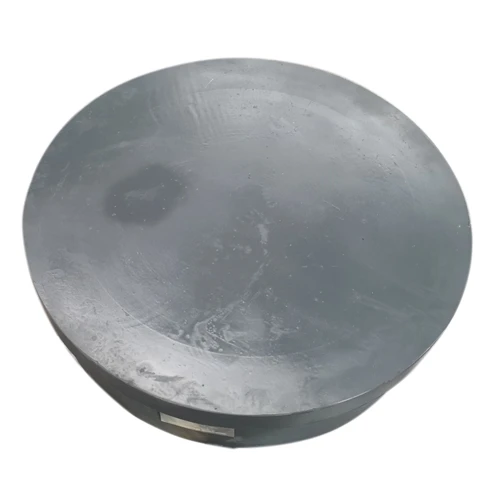
One common question we get from engineers in typhoon-and-earthquake-prone regions is: "How does this hold up over time, with repeated exposure to extreme loads?" The answer lies in the materials we use and the design's inherent robustness. Our spherical steel components are made from high-strength, corrosion-resistant steel that's been heat-treated to withstand the thousands of rotations and slides that come with yearly typhoon gusts and seismic events. The PTFE layer we use is self-lubricating, so it doesn't require regular maintenance (a huge plus for remote or hard-to-reach bridge locations) and resists degradation from salt air in coastal typhoon zones. We also test every bearing to withstand more than 10,000 cycles of extreme movement-far beyond what even a seismic zone like Japan would experience in a 50-year period.
To put this in context, consider a project we completed in Okinawa, Japan, in 2021. Okinawa is hit by 2-3 typhoons per year on average and is part of the Pacific Ring of Fire, with frequent low-to-moderate earthquakes. The local engineering team had previously used Pot Rubber Bearings on a small arterial bridge, but after a typhoon in 2019 caused 12 mm of lateral deck shift and minor cracking in the piers, they switched to our URSBBS Bearings, paired with Buckling Restrained Braces. Two years later, when Typhoon Chan-hom made landfall in Okinawa with gusts over 200 km/h, the bridge recorded only 3 mm of lateral shift and no structural damage. The team also noted that during a M5.1 earthquake that struck the same month, the bearing's rotational design allowed smooth vertical and horizontal movement, with no additional stress to the pier foundations.
It's worth noting that the Universal Rotating Spherical design isn't a one-size-fits-all solution. We work closely with each engineering team to tailor the bearing's size, curvature, friction coefficient, and supplemental components to the specific risks of their location. For example, a bridge in a coastal typhoon zone will need additional corrosion protection for the steel surfaces, while a bridge in a high-seismic zone near a fault line will require a higher damping capacity from products like Lead Viscoelastic Dampers. We also provide full structural analysis support, helping teams model how the bearing will perform under extreme loads before construction begins-something that's critical for meeting international bridge design codes, including AASHTO (American Association of State Highway and Transportation Officials) and Eurocode standards.
Looking ahead, as climate change makes extreme weather events more frequent and intense-typhoons with higher wind speeds, earthquakes with greater magnitude in unexpected locations-the demand for resilient bridge bearings like URSBBS is only going to grow. My team and I are constantly refining our design, testing new materials to improve durability, and collaborating with structural engineers to create integrated systems that balance performance, cost, and maintenance. We've seen firsthand how the right bearing can mean the difference between a bridge that closes for months after an extreme event and one that remains open, providing critical access to communities when they need it most.
If you're an engineer, construction manager, or infrastructure planner working on a bridge project in a region with frequent earthquakes or typhoons, and you want to learn more about how Universal Rotating Spherical Steel Bridge Bearings can protect your structure, we're here to help. We can provide detailed performance data, custom design recommendations, and guidance on integrating supplementary vibration mitigation products like Buckling Restrained Braces, Space Truss Rubber Bearings, Pot Rubber Bearings, Lead Viscoelastic Dampers, and Coupling Beam Dampers to meet your project's specific needs.
References
- Federal Highway Administration. (2020). Seismic Design of Highway Bridges. U.S. Department of Transportation.
- Japanese Road Association. (2018). Design Specifications for Highway Bridges, Part V: Seismic Design.
- International Organization for Standardization. (2021). ISO 10133: Rubber Bearings for Bridges – Specification.
- Zhang, Y., et al. (2017). Performance of spherical steel bridge bearings during the 2016 Meinong earthquake. Earthquake Engineering & Structural Dynamics, 46(12), 1987-2003.
- Okinawa Prefectural Government. (2022). Typhoon and Seismic Resilience Infrastructure Report.